
Biomarker
2 reportsBiomarker is a diagnostic method that interprets biological signals, images, samples, or clinical findings to detect or classify disease. Reliable conclusions require reference standard, clinical validation, and assay sensitivity, while early mechanisms or correlations cannot substitute for validated clinical outcomes.
The scientific record for Biomarker brings together diagnostic accuracy, reference standards, and clinical utility. The analysis begins with false-positive and false-negative rates for clinical utility, and uses validation cohorts to identify where the explanation succeeds or fails; interpretation remains cautious because performance can vary with prevalence, operator skill, and patient population.
The scientific record for Biomarker brings together diagnostic accuracy, reference standards, and clinical utility. The analysis begins with false-positive and false-negative rates for clinical utility, and uses validation cohorts to identify where the explanation succeeds or fails; interpretation remains cautious because performance can vary with prevalence, operator skill, and patient population.

Quantum Algorithms Target Photodynamic Cancer Drug Design Limits
Xanadu Quantum Technologies and the University of Alberta are developing quantum algorithms to simulate light-activated molecules for photodynamic cancer therapy, aiming to overcome classical computational bottlenecks in drug discovery
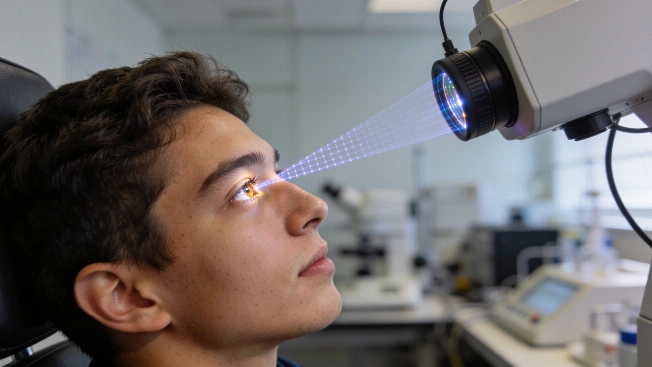
Structured light reveals new patterns for retinal health assessment
Researchers have used spin-orbit coupled light to enhance the visibility of Boehm's brushes-subtle optical patterns in peripheral vision-demonstrating a method that could enable non-invasive tests of retinal integrity using quantum optics techniques