
BepiColombo
5 reportsCoverage places scientific payload, target body, and launch window within the wider context of BepiColombo. One line of support comes from peer-reviewed mission results, and a separate test comes from telemetry; together they clarify target body, but the result is bounded by the possibility that prelaunch goals must be separated from measurements actually returned.
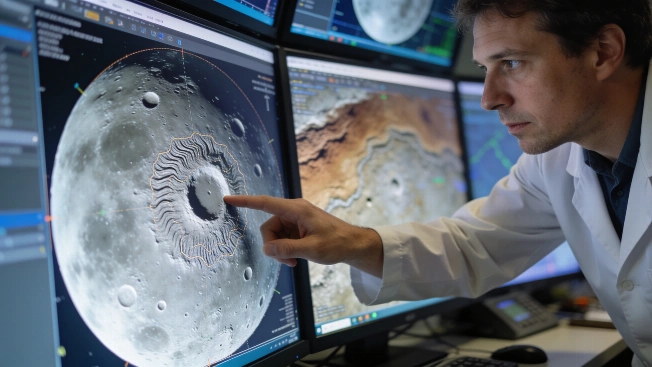
Mercury's Surface Hides Evidence of Greater Planetary Shrinkage
A new study using NASA MESSENGER data finds Mercury may have shrunk by up to 30 percent more than earlier models indicated, with impact debris masking the true scale of planetary contraction
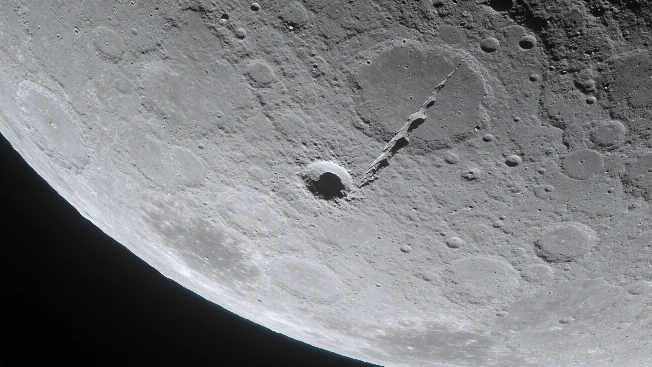
SMART-1's Controlled Lunar Crash Changed How Spacecraft Reach the Moon
Europe's SMART-1 probe ended its mission with a deliberate impact on the Moon, testing solar electric propulsion and gathering data on lunar geology. The mission's engineered crash provided new insight into impact processes and spacecraft design limits
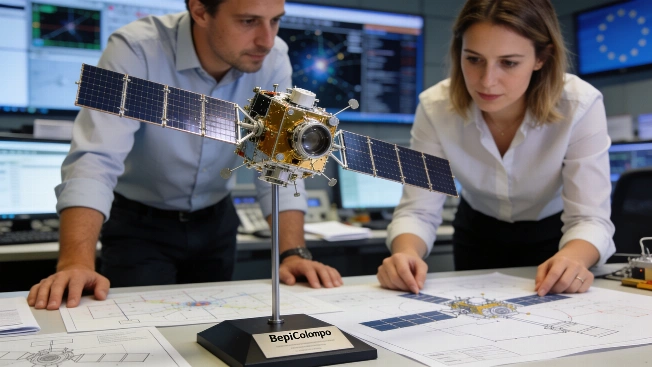
BepiColombo Prepares for Dual Mercury Orbit as Separation Nears
After nearly eight years in transit, ESA and JAXA's BepiColombo mission is set to split into two orbiters at Mercury, aiming to resolve key questions about the planet's surface, magnetic field, and formation using coordinated observations.
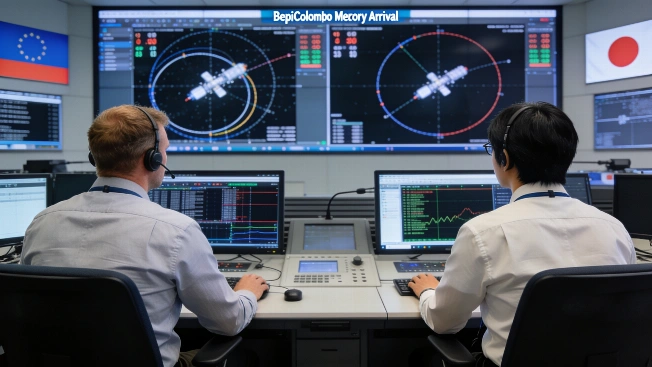
BepiColombo Prepares for Critical Mercury Arrival Maneuver
ESA and JAXA's BepiColombo spacecraft will soon separate its orbiters for Mercury capture, marking a pivotal phase in the mission's multi-year journey to study the planet's surface and magnetic environment

Seventeen Spacecraft Reveal Asymmetric Structure in Solar Ejection
A coronal mass ejection observed in December 2024 was tracked by 17 spacecraft across the solar system, revealing an unexpected double-lobed structure with significant speed differences between its components