Europe's SMART-1 probe ended its mission with a deliberate impact on the Moon, testing solar electric propulsion and gathering data on lunar geology. The mission's engineered crash provided new insight into impact processes and spacecraft design limits
When the European Space Agency's SMART-1 spacecraft struck the Moon on September 3, 2006, the event was not a mission failure but a calculated finale. The probe's engineered descent into the lunar surface was designed to maximize scientific return and test propulsion technology that would shape future interplanetary missions.
Deliberate Impact and Its Scientific Rationale
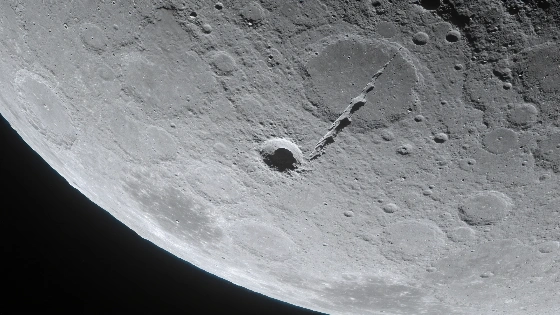
SMART-1's final moments were orchestrated to create a visible impact, allowing astronomers on Earth to observe the resulting flash and study the mechanics of high-velocity collisions. The probe entered the Moon's "Lake of Excellence" region at approximately 7,200 kilometers per hour, generating a crater just over 4 meters wide and a gouge more than 20 meters long. No lunar orbiter witnessed the crash directly, but ground-based telescopes recorded the brief burst of light, providing data on impact dynamics relevant to both planetary science and mission safety.
This controlled collision was not only a test of observational capability but also a means to investigate how lunar regolith responds to artificial impacts. The event offered a rare opportunity to compare engineered and natural impact processes, complementing earlier lunar sample-return missions such as those described in reported earlier.
Mission Objectives and Propulsion Technology
Launched in 2003, SMART-1 was the first European spacecraft to orbit the Moon and the inaugural mission in ESA's Small Missions for Advanced Research in Technology program. Its primary goal was to demonstrate solar electric propulsion-a system using xenon ions accelerated by solar-powered electric fields. This technology promised greater fuel efficiency and lower mission costs compared to conventional chemical rockets.
SMART-1's ion engine enabled a slow, spiraling journey to lunar orbit, consuming a modest supply of xenon propellant. The spacecraft was initially expected to operate for six months around the Moon, but careful management of its propulsion system extended its mission to nearly three years. The final maneuvers exhausted the xenon supply, setting the stage for the planned impact.
Lunar Science and Instrumentation
Beyond its engineering demonstration, SMART-1 carried a suite of scientific instruments to map the Moon's surface, analyze mineral composition, and search for signs of water ice using infrared and X-ray detectors. The probe's data contributed to understanding the Moon's geological history and the distribution of key elements, supporting models of lunar formation and evolution.
During its extended mission, SMART-1 surveyed the lunar surface for nearly two years, collecting high-resolution images and spectral data. The spacecraft's observations helped refine maps of the Moon's mineralogy and provided context for interpreting impact features, both natural and artificial.
Legacy and Influence on Future Missions
The success of SMART-1's solar electric propulsion paved the way for its adoption in subsequent missions. ESA's BepiColombo spacecraft, now approaching Mercury, relies on a similar xenon-powered system for interplanetary travel. NASA's Dawn, Psyche, and DART missions have also employed electric propulsion, validating the approach for deep-space exploration.
SMART-1's operational longevity and controlled end-of-life strategy demonstrated how small, cost-effective missions can deliver both technological and scientific advances. The probe's impact site was eventually identified by NASA's Lunar Reconnaissance Orbiter in 2017, confirming the predicted location and dimensions of the crater. This outcome underscores the value of combining engineering innovation with targeted scientific objectives in planetary exploration.
SMART-1's mission stands as a model for integrating technology demonstration with focused science. By deliberately ending its journey in a visible lunar crash, the spacecraft provided a unique dataset on impact physics and validated propulsion methods that now underpin ambitious missions across the Solar System. The evidence shows that careful mission design-balancing risk, cost, and scientific ambition-can yield results that outlast the hardware itself.
Solar electric propulsion, as tested by SMART-1, uses electricity from solar panels to ionize and accelerate xenon gas, producing a gentle but continuous thrust. Unlike chemical rockets, which deliver short, powerful bursts, ion engines operate over months or years, enabling efficient trajectory changes with minimal fuel. This method is especially suited to missions requiring long-duration travel or complex orbital maneuvers, and its success on SMART-1 has influenced the architecture of modern planetary spacecraft.