
Bell Test
2 reportsBell Test is a physics experiment built to test a defined question with calibrated measurements and explicit uncertainty estimates. Technical records and released data are judged through data acquisition, experimental objective, and control sample, including failures, uncertainty, and operating constraints.
The record associated with Bell Test is clarified through experimental loopholes, together with device-independent tests and Bell inequalities. The account anchors Bell inequalities in independent experimental checks and uses calibrated measurements to test whether the pattern extends beyond one dataset; the comparison must account for the fact that loopholes, backgrounds, and model assumptions can affect interpretation.
The record associated with Bell Test is clarified through experimental loopholes, together with device-independent tests and Bell inequalities. The account anchors Bell inequalities in independent experimental checks and uses calibrated measurements to test whether the pattern extends beyond one dataset; the comparison must account for the fact that loopholes, backgrounds, and model assumptions can affect interpretation.
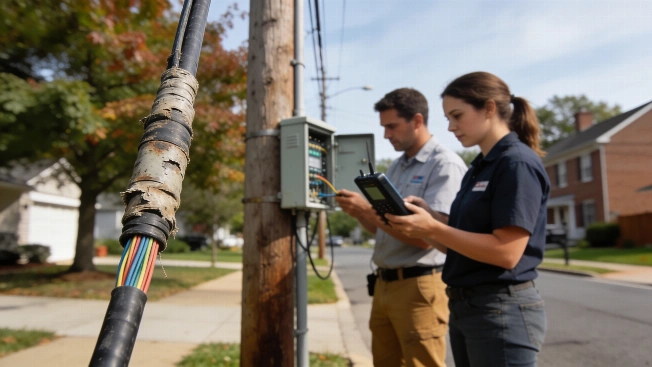
Entangled Photons Sent Over 62 km of Live Aerial Fiber in Maryland
A team from NIST, the University of Maryland, and Qunnect has distributed polarization-entangled photons across 62 kilometers of commercial aerial fiber, testing quantum communication under real-world environmental noise
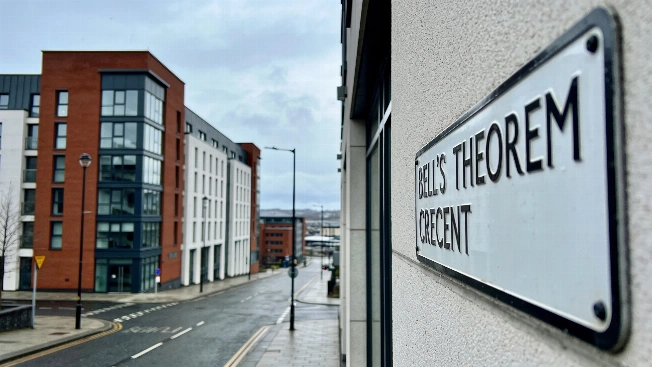
How Bell's Theorem Emerged from an Unusual Physics Journal
John Bell's 1964 theorem on quantum nonlocality was first published in a short-lived journal with an unconventional editorial model. The story of this publication highlights the challenges of peer review, editorial selection, and scientific recognition in quantum physics