A grain-grinding stone came from deposits below Rossett's villa, while phased floors and heating remains point to a complex Roman residence. The context supports earlier activity but does not date it precisely
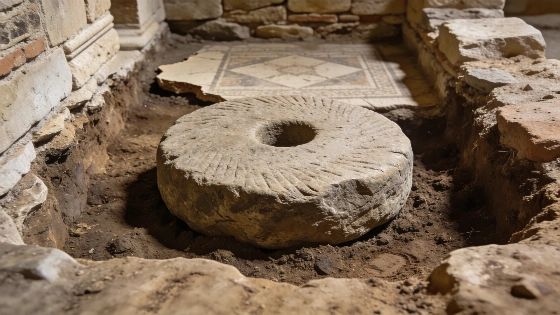
A complete quern stone recovered from deposits beneath Rossett's stone-built villa places human activity at the site before the residence was constructed. The find establishes a sequence, not the identity of the people who used the area or the exact date of their activity.
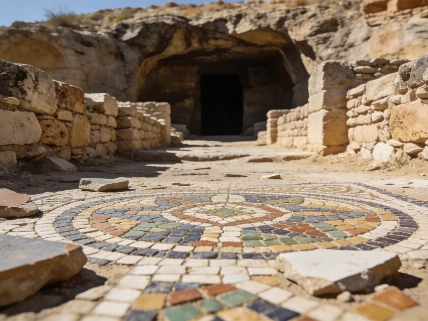
The excavation near Wrexham has also exposed a Roman building with intact floor levels and evidence of a hypocaust, an underfloor heating system. Together, the remains point to a site whose use changed over time. Researchers identify Rossett as the first structurally attested Roman villa rustica in north Wales, adding evidence of rural Roman life to a regional archaeological record long focused more heavily on military and industrial remains.
Activity beneath the villa
A quern was used to grind grain. Its position below the stone-built villa is the basic evidence: the object came from an archaeological layer that predates the building's construction. That relationship indicates an earlier phase of activity, although the quern-bearing layer has not been assigned an absolute date or a precise interval before the villa was built.
The distinction matters. Stratigraphic position can establish that one deposit is earlier than another, but it does not by itself reveal how much time separated them. Nor does a quern alone establish the scale of food production, the people who used it, or whether they lived permanently at the site.
Interest in Rossett began in 2019, after metal detectorist Robert Jones found a Roman lead ingot near Wrexham. The discovery prompted archaeological investigation of the surrounding area. Later work by the University of Chester and Archaeological Survey West identified Roman flooring and ceramics, among other evidence, leading researchers to recognize a large villa complex. The excavation involved the University of Chester and DigVentures, with students working alongside archaeologists and local volunteers.
Caroline Pudney and Stephen Grenter's Britannia article, published online on 20 October 2026, presents interim details of the villa and sets out priorities for further research into rural settlement along Rome's western frontier. Their account places the Rossett discovery in a wider effort to understand domestic and agricultural life beyond the region's better-known military sites. The article is listed by Cambridge University Press.
A changing building
The villa appears to have developed in stages rather than being built as one unaltered project. In Trench 1, excavators found intact Roman floor levels and surviving evidence of hypocaust heating. Researchers have suggested that the building may at one point have functioned as a bathhouse; the evidence described so far does not establish that interpretation as certain.
At a different Roman site, a surviving iron grille preserves evidence of a building feature. At Rossett, floors and heating remains provide a separate line of evidence for how Roman architecture was used and altered.
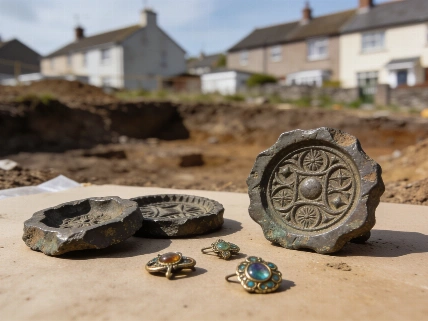
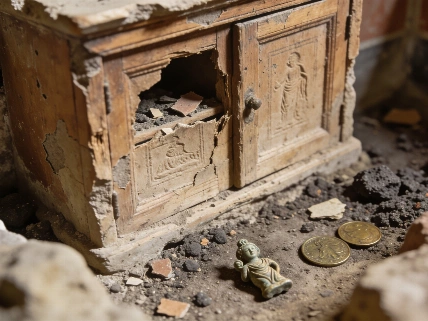
Finds from the villa include pottery and coins, as well as animal bone, building material and painted wall plaster. The quality of the building and its heating system is consistent with access to resources associated with Roman domestic comfort. These materials also support the interpretation that the settlement had connections beyond its immediate surroundings, but the reported finds do not identify specific trade routes or the status of individual residents.
What remains unknown
Rossett is impressive because high-status Roman residences have been comparatively scarce in the evidence traditionally recognized for North Wales. The discoveries support a more complex picture of Roman settlement in the region, while leaving open how the villa related to earlier activity and how its buildings functioned across different phases. BBC coverage of the site describes the discovery as changing perceptions of Roman affluence and community life in Wales, and features University of Chester archaeologist Caroline Pudney and heritage specialist Steve Grenter. The programme is available on BBC Sounds.
The project account reported that post-excavation analysis of artifacts, environmental samples and records had begun. It said the results would inform plans for further research in 2027.
Stratigraphy is the study of layers and their relationships in an archaeological deposit. When a find lies beneath a building layer, its context can show that it was deposited earlier than the construction above it. That relative sequence is different from an absolute date, which requires additional evidence or a dating method. At Rossett, the quern's position establishes earlier activity, while its precise age and the character of that activity remain unresolved.