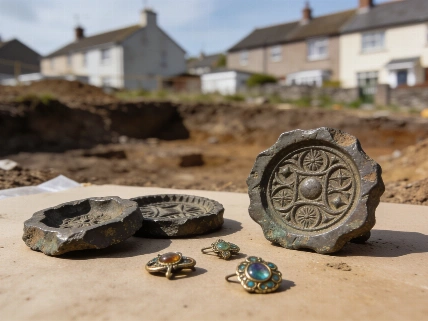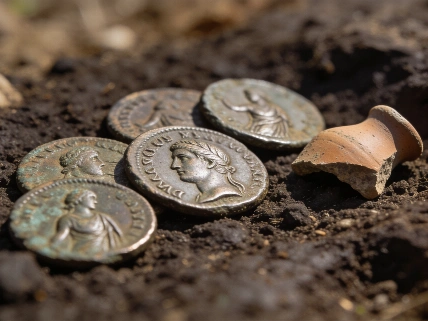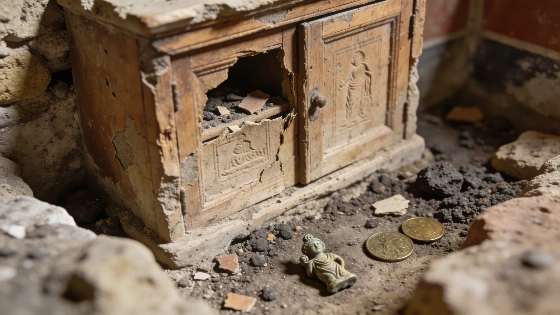
A cupboard on Pompeii's Via dell'Abbondanza contained at least 24 miniature amulets and 38 bronze coins, alongside cooking and grooming equipment. Archaeologists cannot establish who owned the necklace or who lived in the house
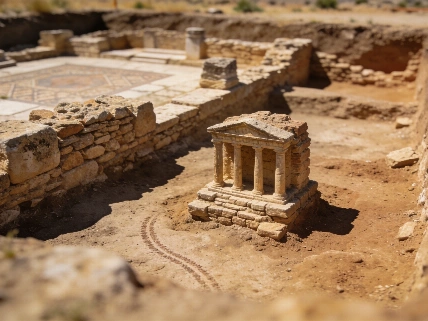
The mix of personal keepsakes and everyday equipment suggests the occupants may have had little chance to retrieve their belongings when Vesuvius erupted in AD 79. The cupboard stood in House IX 11, 7, also known as the House of Cornelius Maximus, on Via dell'Abbondanza, one of Pompeii's principal thoroughfares.
Its wooden structure had largely decomposed, but fragments and impressions in the volcanic deposits allowed archaeologists to reconstruct its form. The Archaeological Park of Pompeii described the discovery in a report on the cupboard. Its contents, left in place when the eruption buried the city, offer a close view of household life before the disaster.
A child's amulets
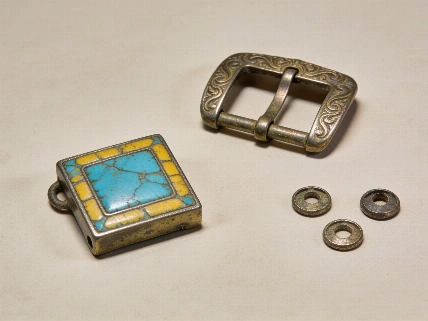
Among the finds were at least 24 miniature objects made from bone, glass paste, earthenware and rock crystal. Together, they formed a necklace of the type known as crepundia, traditionally associated with Roman children. The Archaeological Park of Pompeii has described these necklaces as both protective amulets and rattles, whose sounds could help adults keep track of children, as reported by The Japan Times.
The miniatures include hands and feet, pine cones, bunches of grapes and figures of Bes and Mercury. Bes was an Egyptian protective deity who became popular in parts of the Greco-Roman world and was associated with protecting households, mothers and children. Mercury, a Roman god linked to commerce and travel, was also associated with communication.
Crepundia could serve as protective amulets, and the pieces made a rattling sound as they moved. Such necklaces could also be kept into adulthood as reminders of childhood. Archaeologists cannot tell whether this one belonged to a child in the house or was an adult's keepsake.
A report on a Moche child burial likewise described grave goods whose social meaning remains open to interpretation, although that find came from a funerary context rather than a Roman household.
Household evidence
The cupboard also held practical possessions. Archaeologists identified bronze vessels, along with ceramic and glass examples. They found cookware and tweezers, plus a small glass container that may have held perfume or ointment. An incense burner was among the objects.
A wooden box contained lead weights, which may indicate that someone connected with the household took part in commercial activity. Nearby, 38 bronze coins were gathered inside a small woven container. The varied contents included personal adornments, grooming tools, cooking equipment, money and objects associated with ritual or household practice.
Inscriptions found at the property have associated it with a man named Cornelius Maximus. They do not establish who lived there when Vesuvius erupted. Gabriel Zuchtriegel, director of the Archaeological Park of Pompeii, said ordinary finds can help researchers connect traces of daily life and personal memory.
The building's façade was excavated in 1912. Several rooms behind it were investigated as part of a wider conservation and restoration project. In an elevated part of the house, archaeologists also found the fragmented remains of two young mice inside an amphora.