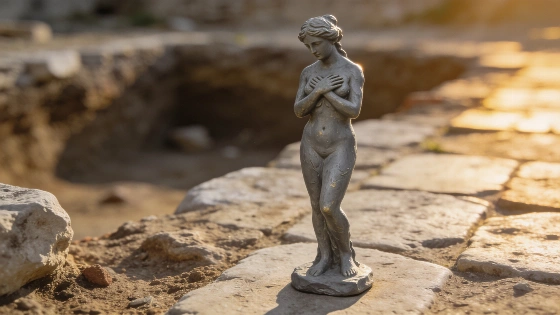
A lead statuette showing Venus Pudica was found at Pilisszentiván-Hárs, where it is the first religious object identified. Other finds include tools, armor, pottery and coins
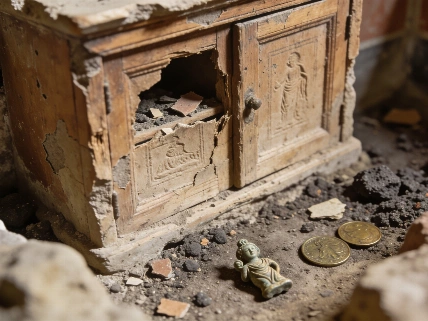
The figurine shows a nude woman covering her body with her hands, a pose associated with Venus Pudica. At the Roman settlement of Pilisszentiván-Hárs, it is the first religious object uncovered, Bence Simon of Eötvös Loránd University said.
The Figurine
The lead statuette is the site's first identified religious object. Roman lead figurines of Venus are a documented category across provinces including Britannia, Gaul, Germania, Italy, Noricum, Pannonia, Moesia and Dacia. A regional study records several dozen simplified examples from Lower Pannonia and Upper Moesia. Its authors have proposed that some central Balkan examples may have been made at workshops associated with Venus worship centers at Sirmium and Viminacium.
Lead devotional objects are also known from Roman Hungary. A scholarly study describes a lead icon from Lébény-Barátföldpuszta, within the territory of the Roman settlement of Quadrata in Pannonia Superior. The urban center of Sopianae, now Pécs, has yielded three different lead icons and a marble relief. Comparable finds have come from rural and military settings as well as towns.
Other Finds
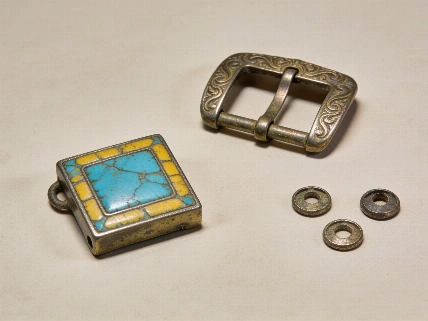
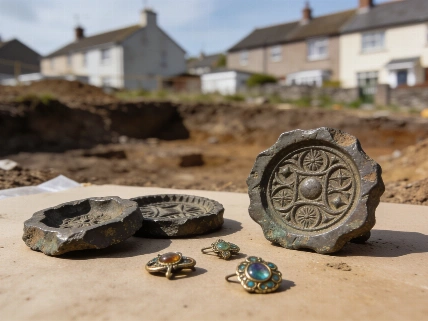
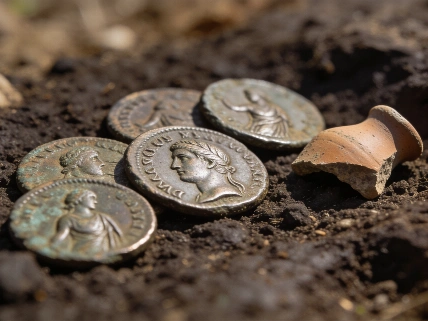
Researchers also recovered a fragment of leaded bronze armor and iron tools. Brooches, an iron tong, pottery and coins were among the other finds.
The Pilis region has an archaeological record extending back to the Neolithic. The Duna-Ipoly National Park Directorate reports excavations at 15 archaeological sites in the town and the Dolina Valley. At another Hungarian site, near Szombathely, an excavation linked to construction of an E.ON electrical substation uncovered remains from nearly 7,000 years of occupation, including a Roman villa estate.
A Possible Work Area
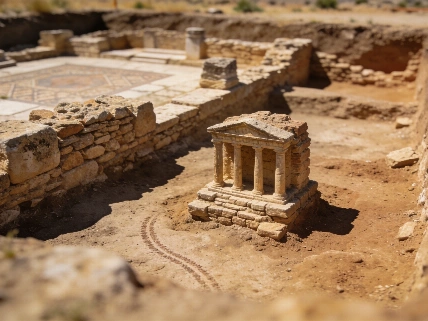
A structure beside an area paved with stone slabs may have been used for work-related activities. Roman devotional objects have been found in varied contexts: a lead icon at an agricultural settlement in present-day Romania was associated with evidence of farming, while finds from an auxiliary fort at Pojejena represent a military setting. A separate report on Roman-era archaeology described a possible earlier monumental entrance at Porta Barete, explored in the L'Aquila excavation.
Research on Roman lead Venus figurines discusses their distribution and the proposed workshops at Sirmium and Viminacium. A study of religious objects from Pannonia and neighboring provinces documents lead icons in urban, rural and military contexts.