At a natural spring north of Southampton, excavators uncovered four Iron Age oak-trunk wells and a Roman timber-lined structure. Waterlogged soil preserved tool marks and evidence of repairs
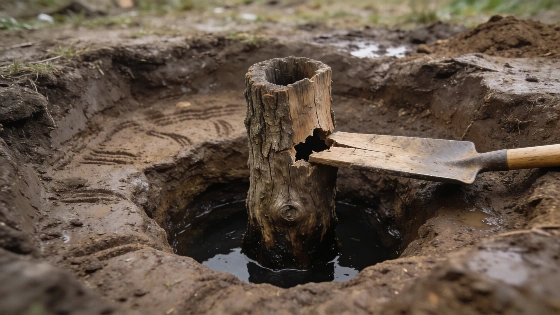
A broken wooden well section had been supported with the blade of a shovel, evidence that people repaired the structure while it was in use. The well was one of five found at a spring north of Southampton during archaeological work ahead of a new water pipeline. The Associated Press report, published on 5 November 2026, also described five remarkably well-preserved wells near Southampton: four attributed to the Iron Age and one associated with the Roman period.
Archaeologists from UCL Archaeology South-East uncovered the structures ahead of construction between Otterbourne and Southampton. Four are thought to date to the Iron Age; the fifth was built in the Roman period. Pottery recovered within and around the wells indicates that the spring continued to be used into the later Roman period. Together, the finds record the use of the same natural water source across a long span of time.
Oak and timber
The Iron Age wells were made from hollowed oak trunks set vertically into pits. The largest is about 70 centimeters across. One had a reinforcing ring of wooden stakes, while another showed signs of repair. Radiocarbon dating of one structure produced a range of 719 to 396 BCE, placing it more than 2,000 years ago.
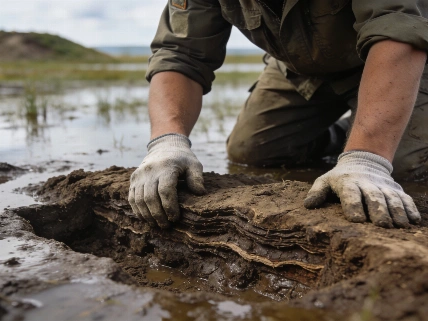
Wet, oxygen-poor soil around the spring preserved the timbers by slowing the biological decay that typically breaks down wood. Axe marks remained visible on some pieces. Rachael Geoghegan of UCL Archaeology South-East described the survival of wooden structures from this period as rare. Before removal, archaeologists stabilized the waterlogged wood and lifted the hollowed trunks as intact as possible.
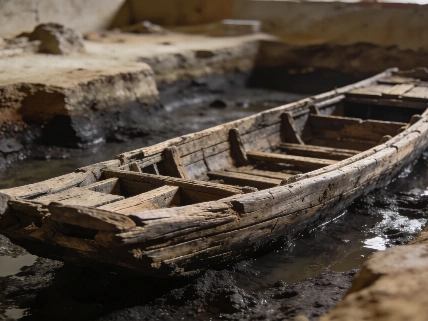
The Roman well used a different design: builders dug a shallow rectangular pit and lined it with timber planks and stakes. Oak appears to have been the main material. Larger timbers alongside smaller roundwood stakes indicate that wood came from mature trees and saplings; some of the larger pieces may have been reused. Excavators recorded the structure in detail to distinguish its construction phases.
Evidence from the spring
The two types of well offer a comparison of water-management construction across the Iron Age and Roman period. Hannah Street, a specialist in waterlogged wood, said the structures show changing approaches to building wells. Their shared setting at a natural spring also indicates that the water source served local communities over a long span.
Specialists are examining tool marks and joints on the timbers. Researchers are also studying recovered artifacts and environmental samples, including pollen and preserved plant remains, to investigate the site's surroundings and use. A separate account of charred Bronze Age loaves described preservation through burning; at the Hampshire spring, waterlogged soil protected the wood.