Lead moulds and Roman brooches from Mancot point to specialized metalwork near Chester, while coins spanning more than a century suggest activity over a long period. The settlement may extend beneath the modern village.
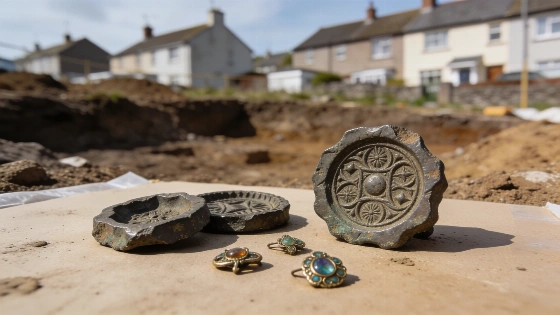
Lead moulds recovered at Mancot bear evidence of a local craft operation, including forms used to make decorative brooches. The finds came to light during archaeological investigations ahead of housing construction on Gladstone Way in Flintshire. Heneb, the Trust for Welsh Archaeology, announced the discovery on 7 November 2026. The site lies between Hawarden and Queensferry, on elevated ground overlooking Chester.
Excavations by Heneb recovered dozens of objects, including Roman brooches, jewellery moulds, pottery and coins. The BBC reported the discovery as one of the largest Roman artefact collections identified in Flintshire. Heneb described it as "very significant" and unexpected.
Evidence of occupation
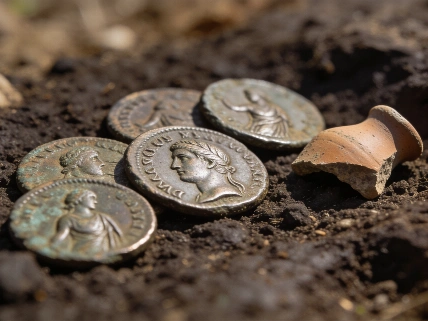
Two coins offer evidence of activity at widely separated points in time. One dates to the reign of Emperor Commodus, AD 177-192. The other depicts Constantine, whose reign began in AD 306. The coins strengthen the evidence for activity across the Roman period, but do not by themselves establish continuous occupation.
Archaeologists think the settlement may have begun in the Iron Age and continued through much of the Roman period. Its earliest phases remain a subject for further study. The settlement was mapped as extending beyond the excavated area beneath parts of modern Mancot.
Mancot occupies elevated ground overlooking Chester, but comparatively little Roman archaeology had previously been identified in parts of north-east Wales. Finds at Greenfield and Rossett add to evidence for a more complex picture of the region and its communities.
Making brooches
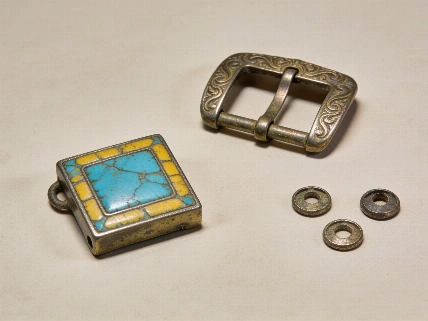
Roman brooches fastened clothing and could also serve as personal ornaments. Some recovered at Mancot retain traces of coloured enamel; others were shaped like animals. The lead moulds show that artisans could produce a range of brooch types, providing evidence of local manufacture rather than simply the presence of imported objects.
Project manager Chris Matthews said the workshop showed "industry" using the area's rich metal resources to produce important goods for Roman society. Researchers suggest its products may have reached people in nearby Chester, known to the Romans as Deva Victrix.
Chester developed around a major legionary fortress established during the Roman conquest of Britain and became one of the province's most important military centres. Pottery from Mancot also points to wider trading connections, with some material suggesting links to mainland Europe.
A separate Celtic burial report from Bavaria describes recovered ornaments in a funerary context; at Mancot, moulds instead provide evidence for production.
Beyond the excavation
Archaeologists recorded and mapped the remains before housing was built over the investigated area. Their survey indicates that the settlement extends beyond the excavated ground and beneath parts of modern Mancot, so the excavated plot represents only part of the site.
A selection of brooches and manufacturing moulds has undergone conservation and is scheduled for further analysis at the National Museum of Wales in Cardiff. Specialists are to examine how the objects were made, the metals used and the origins of the raw materials. The artefacts are expected to return to north-east Wales for public display after study.
Flintshire Museums Service hopes to display some of the most important objects, particularly Roman brooches, at Mold Museum during 2027.