At Horbat Burgin, underground hiding passages and burial caves preserve evidence of successive occupation; the opened complex also exposes surviving mosaics from its Byzantine church
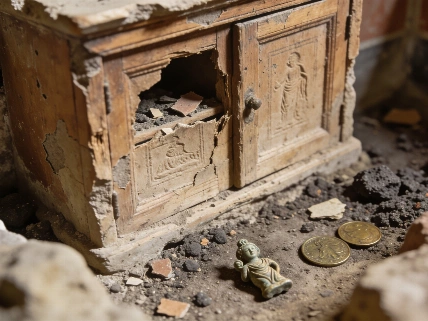
Looters breached burial caves and underground passages at Horbat Burgin, damaging structures above ground as well. Excavations and conservation work followed, preparing parts of the complex for public visits. In November 2026, the Israel Antiquities Authority (IAA), Keren Kayemeth LeIsrael-Jewish National Fund (KKL-JNF) and the Mateh Yehuda Regional Council jointly inaugurated the newly accessible areas.
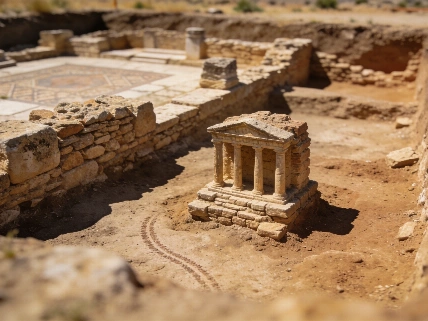
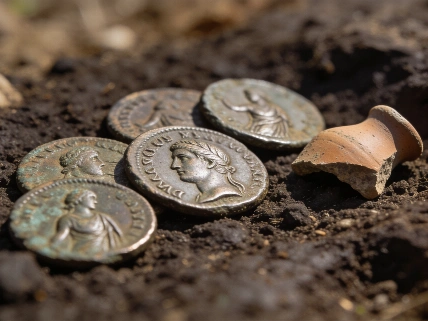
The site lies within Adullam-France Park in Israel's Judean Foothills. Its archaeological record spans from the Second Temple period through the Ottoman period, with remains from successive communities and building phases. The opening followed years of excavation, conservation and site development, rather than a single new discovery. Haaretz reported that the public presentation includes tunnels cut into the bedrock during conflicts with Rome and a later Byzantine church.
Settlement and tunnels
Excavations by the Israel Antiquities Authority uncovered a large settlement dating to the Second Temple period. Dr. Amir Ganor led the work, with Alon Klein and Dr. Peter Gendelman also participating. Ganor has described Horbat Burgin as the largest ancient settlement in the surrounding area, both in its extent and in the scale of its surviving remains.
Researchers have proposed identifying the settlement as Caphar Bish, a village mentioned by the first-century historian Flavius Josephus. That identification remains an interpretation, not a confirmed match.
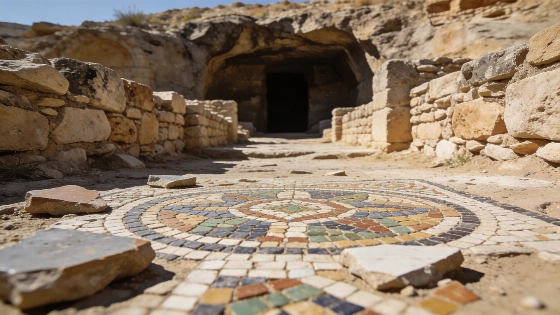
During the Early Roman period, inhabitants cut an extensive network of hiding tunnels into the local bedrock in preparation for conflict against Roman rule. Approximately 200 meters of preserved underground passages are now accessible to visitors. The settlement was later damaged and destroyed during the Bar Kokhba Revolt, the Jewish uprising against the Roman Empire dated to AD 132-136.
After the revolt, a pagan population settled among the ruins and built above earlier remains. Burial complexes were also carved underground, extending the site's network of subterranean spaces. The site's wider sequence of occupation continued across later periods.
Church and economy
In the Byzantine period, a large church and a related monastic complex were built at Horbat Burgin. Sections of the church's colorful mosaic floors survive and are among the features visitors can see. The opening joined these remains with the underground tunnels as part of a broader archaeological landscape in Adullam-France Park. A separate report on the Posa Hill excavation describes another archaeological site with a monastery network.
Archaeologists also found columbaria, structures used to keep pigeons, along with winepresses in the settlement and surrounding landscape. These installations indicate that pigeon breeding and wine production formed part of the local economy.
The joint inauguration by KKL-JNF, the IAA and the Mateh Yehuda Regional Council marked the completion of years of excavation, conservation and development work. The preserved tunnels and church mosaics are now part of the public presentation of Horbat Burgin, alongside its burial caves and remains from successive periods. Jewish News Syndicate reported on the joint project and the opening of the site to visitors.