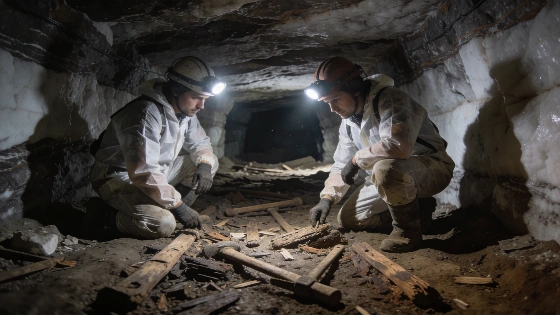
Archaeologists have mapped a 300 meter network of Iron Age mining chambers beneath Hallstatt in Austria using core drilling, exposing thick layers of preserved debris and organic remains that offer new evidence for prehistoric salt extraction and community resilience
Archaeologists have identified thick layers of prehistoric mining debris-some as deep as nine meters-on the floors of newly mapped Iron Age chambers inside the Hallstatt salt mine in Austria. The mountain's salt has preserved not just discarded tools and scraps of clothing, but also organic remains like food traces and human waste. These finds offer a rare look at daily life and work in the mine more than two thousand years ago. The Natural History Museum Vienna (NHM), working with Salinen Austria AG since 2022, has used core drilling to explore the site with minimal disturbance.
Using these drilling methods, NHM Vienna archaeologists traced a network of parallel mining chambers stretching at least 300 meters under the mountain. Instead of a single large space, Iron Age miners carved out a series of adjacent chambers-each up to 25 meters wide and 20 meters high-following the natural salt seams. This layout, not previously documented at Hallstatt, shows a detailed understanding of the mountain's geology and a careful approach to extracting salt in the sixth century BCE. Reports from Austria describe the chambers as both side by side and stacked vertically, a new type of mine structure for this site.
What the Salt Preserved
Conditions inside Hallstatt are unusual: salt slows decay, so organic materials that would normally disappear-textiles, wooden vessels, even human excrement-have survived for millennia. Among the finds are burnt pine splinters used for light, broken mining tools, and fragments of clothing, some still marked by food stains. These remains give direct evidence of the technology, clothing, and diet of the Iron Age miners. The site's preservation has drawn international attention, and studies in journals like Nature have highlighted Hallstatt's importance for understanding prehistoric life.
Genetic material in the debris could help researchers study the miners' health, ancestry, and diet. Human waste and food remains open the door to ancient DNA and dietary analysis, which has changed how other prehistoric populations are understood. The Hallstatt material also resembles finds from the Dürrnberg salt mines near Hallein, hinting at links between mining communities in the region. Teams from institutions such as the Max Planck Society have developed DNA analysis methods in similar settings, providing a model for future work at Hallstatt.
Mining Scale and Setbacks
Salt mining at Hallstatt began long before the Iron Age, with Neolithic activity dating back about 7,300 years. By the Late Bronze Age, production reached an estimated 1.5 tonnes of salt per day-close to industrial scale for the time. The mine was repeatedly hit by landslides, which sent surface material into the tunnels and filled old chambers. Even so, evidence shows that mining usually resumed within a few years, underlining both the value of salt and the community's persistence. This pattern of resilience appears in studies of other ancient mining sites as well.
Later tunnels sometimes cut through older workings, making it hard for archaeologists to access the prehistoric mine. The introduction of core drilling in 2022, using equipment from Salinen Austria AG, has allowed researchers to map areas that were previously out of reach, without large excavations. This has revealed the true scale of Iron Age mining at Hallstatt and the complexity of its underground layout. The project is backed by Austria's federal and regional authorities, who support both the research and the preservation of the site.
Tools and Daily Life
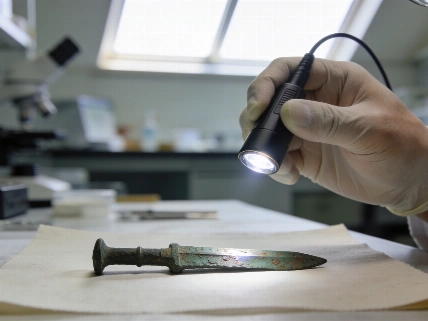
Analysis of tools from the new chambers shows a shift in technology during the Iron Age. Earlier Hallstatt tools were highly standardized, but the Iron Age set includes a wider range of hafts and tool shapes. This could reflect changes in mining methods or adaptations to different rock conditions. Preserved textiles and wooden vessels, some with food remains, add to the picture of daily routines and resource use. Ongoing research with European archaeological institutes and labs, including those linked to MIT and Harvard, is expected to shed more light on how mining technology evolved.
Comparisons with other prehistoric salt mines, like Dürrnberg, may help clarify whether these changes were local innovations or part of a broader regional trend. The preservation at Hallstatt allows for detailed study of organic materials that rarely survive elsewhere, giving a unique view into the lives of ancient miners.
Reopening Old Sites
Alongside the exploration of new chambers, archaeologists are working with mine operators to reopen older excavation sites inside the mountain. Many of these areas have been closed off for decades and need reinforcement and new infrastructure for safe access. The project, supported by Austria's authorities, aims to apply modern analytical techniques-including genetic, microscopic, and environmental methods-to material from earlier digs. Advanced laboratory methods, such as those developed at CERN, are expected to improve the detail and accuracy of archaeological data from Hallstatt.
For comparison, Hallstatt's scale and preservation stand out even among major European prehistoric sites. While discoveries like those at Huttons Ambo in England show long-term settlement, Hallstatt's salt mine preserves a continuous, layered record of mining and daily life over thousands of years. The newly mapped Iron Age chambers suggest that much of this record is still unexplored, with the potential to change what is known about prehistoric technology, economy, and community life.
The Hallstatt discoveries show the value of combining new methods with established archaeological archives. As researchers prepare to present their latest findings at the "Archaeology on the Mountain" event, the evidence from Hallstatt makes clear that even well-studied sites can still hold surprises. The next challenge is to balance the scientific potential of these deposits with the need for careful, minimally invasive research-a task that will require both technical innovation and respect for the site's integrity.
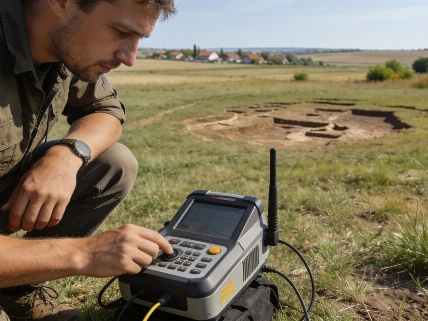
Core drilling is a minimally invasive way to sample and map underground features without large excavations. By extracting cylindrical cores of sediment or rock, archaeologists can identify ancient chambers, debris layers, and preserved materials while keeping the site's structure intact. In salt mines like Hallstatt, this method is especially useful because it reduces the risk of destabilizing the mountain or damaging fragile remains. It also allows for targeted sampling for lab analysis, including ancient DNA and residue studies, while preserving the context needed for archaeological interpretation.