
Titan
4 reportsCurrent work on Titan is assessed through surface geology and interior structure, with separate attention to atmosphere or exosphere. Claims involving interior structure are weighed against model comparison and checked with multiwavelength observations; the evidence cannot remove the concern that limited viewing geometry and indirect measurements can leave competing explanations.
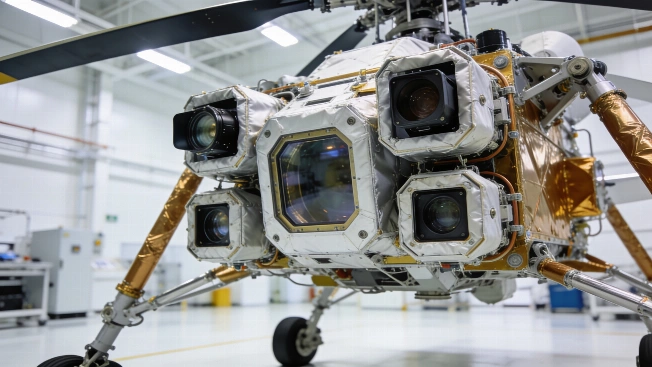
NASA's Dragonfly Adds Seven Cameras for Titan Science
Dragonfly's seven-camera science suite has been installed and tested at APL, including wide-angle and microscopic imagers. The overlapping views will help scientists study Titan's terrain and assess potential sampling sites
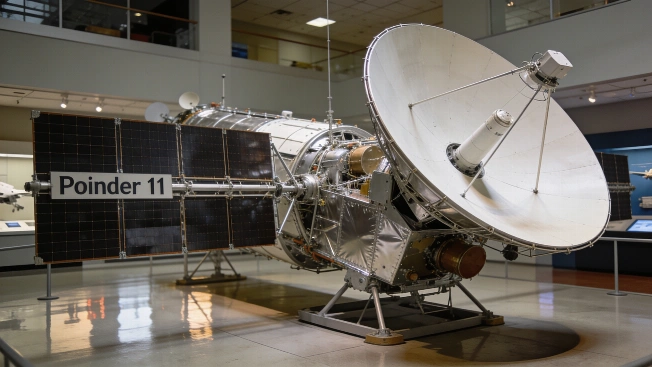
Pioneer 11's Saturn Flyby Tested the Limits of Deep Space Navigation
NASA's Pioneer 11 spacecraft became the first probe to traverse Saturn's rings in 1979, gathering data about the planet's moons and rings while measuring its magnetic field and clearing the way for later missions to the outer solar system.
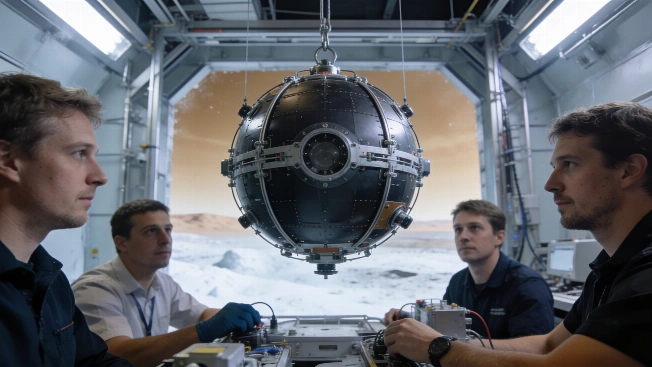
NASA Backs Spherical Aerobots to Probe Titan's Subsurface Caves
A NASA-funded study is developing small, spherical flying robots designed to explore the hydrocarbon caves and sinkholes of Saturn's moon Titan. The aerobots would use solid-state ion propulsion to handle terrain that conventional rovers could not cross.
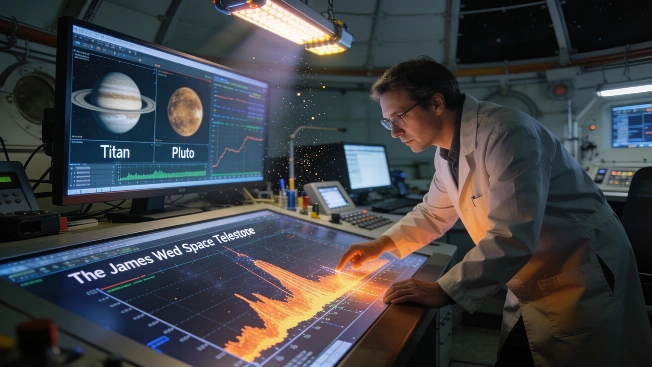
James Webb Telescope Detects Unidentified Infrared Signal on Titan and Pluto
The James Webb Space Telescope has recorded a mysterious infrared absorption feature on both Saturn's moon Titan and the dwarf planet Pluto, hinting at shared surface chemistry despite their contrasting environments.