
Stem Cell
2 reportsStem Cell is a biological concept used to explain organization, inheritance, regulation, development, adaptation, or interaction. Understanding depends on cellular process, evolutionary context, and biological definition, including the conditions under which a model, proof, or explanation applies.
A detailed treatment of Stem Cell follows variation across organisms or environments, together with measurement methods and functional consequences. The treatment of functional consequences keeps independent molecular measurements separate from controlled experiments until their assumptions and scales are compared; the strongest interpretation still recognizes that effects can depend strongly on species, tissue, environment, and developmental stage.
A detailed treatment of Stem Cell follows variation across organisms or environments, together with measurement methods and functional consequences. The treatment of functional consequences keeps independent molecular measurements separate from controlled experiments until their assumptions and scales are compared; the strongest interpretation still recognizes that effects can depend strongly on species, tissue, environment, and developmental stage.
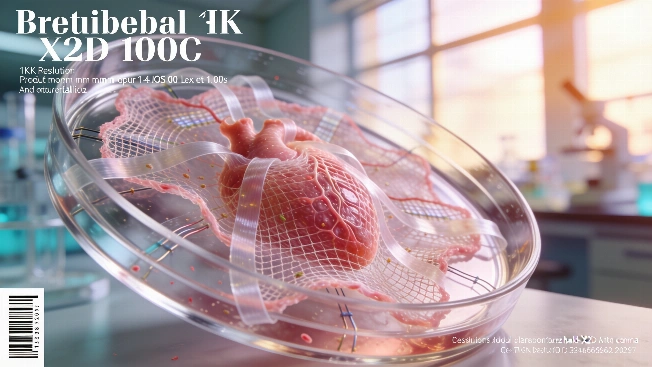
Living Cells Could Help Power Battery-Free Implants
A University of Massachusetts Amherst team built a flexible mesh that interweaves energy-harvesting ribbons with cardiac microtissue. The lab prototype points to a possible power source for implants but has not been shown powering a medical device
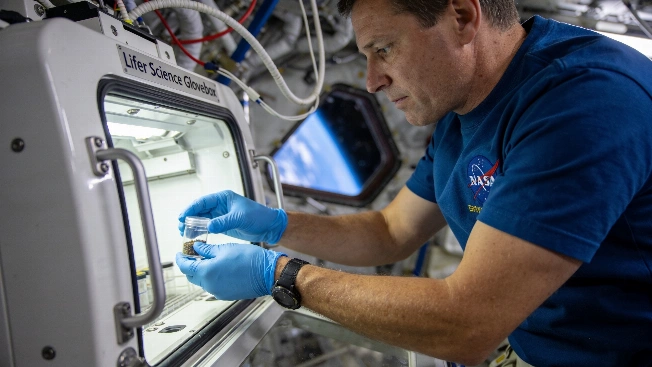
Crew-12 Heads Home After 235 Days of Science in Orbit
NASA's SpaceX Crew-12 is preparing to leave the International Space Station after a 235-day mission investigating quantum systems, living tissue, microbes, materials and medical supplies, with undocking possible as early as October 5, 2026.