
Science Literacy
6 reportsThe page treats educational or policy interventions; measured outcomes; and definitions and assessment as distinct parts of Science Literacy. The strength of statements about educational or policy interventions depends on how well longitudinal outcomes is supported by validated assessments; the result is bounded by the possibility that test performance may not capture how people evaluate evidence in real decisions.
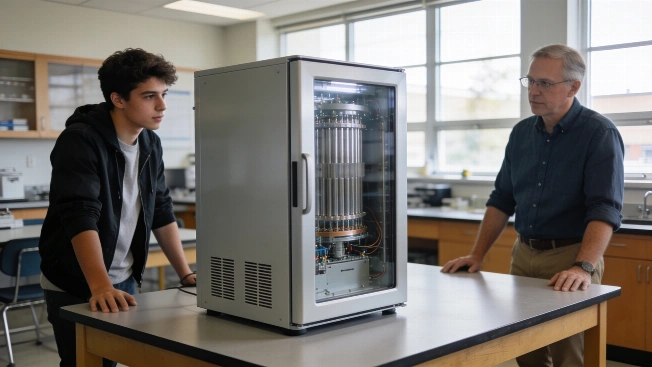
Room Temperature Quantum Computer Heads to Public High School
Fairfax County Public Schools plans to place XeedQ's four-qubit diamond spin processor at Skyview High School in December 2026, giving students direct access to room-temperature quantum hardware through learning pathways beginning in spring 2027.

Neil deGrasse Tyson releases Lost in Space, a new encyclopedia of the cosmos
Neil deGrasse Tyson and Lindsey Nyx Walker introduce Lost in Space, a 400-page National Geographic encyclopedia packed with thousands of facts, images, and profiles of planets, telescopes, and cosmic phenomena.
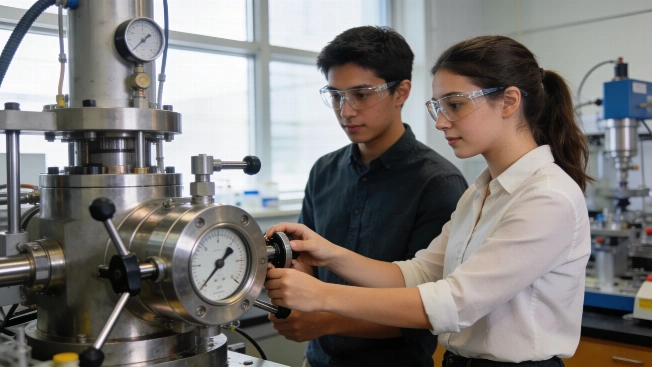
NASA SCoPE Trains Planetary Science Interns in Public Engagement
NASA SCoPE collaborated with Arizona State University's FORCE Summer School to provide undergraduate interns with hands-on training in science communication and public outreach, focusing on planetary research under extreme conditions

Communicating Quantum Technology: Challenges for Public Understanding
As quantum computing research accelerates, effective communication strategies are needed to explain complex quantum concepts, address technical jargon, and reach diverse audiences across the quantum sector
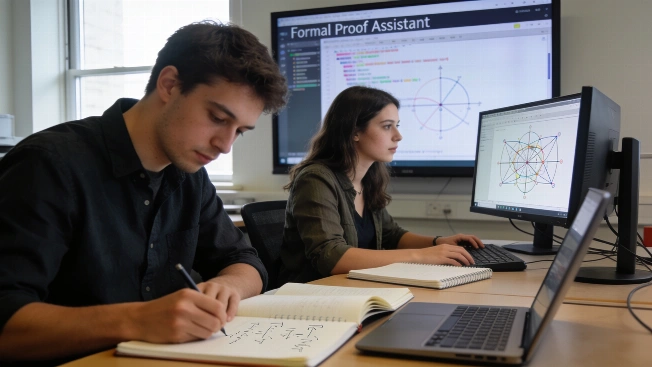
AI Systems Challenge Human Role in Mathematical Discovery
Recent advances in large language models and proof assistants have enabled AI systems to generate, formalize, and verify complex mathematical proofs, raising new questions about the future of human mathematicians and the value of human understanding in mathematics
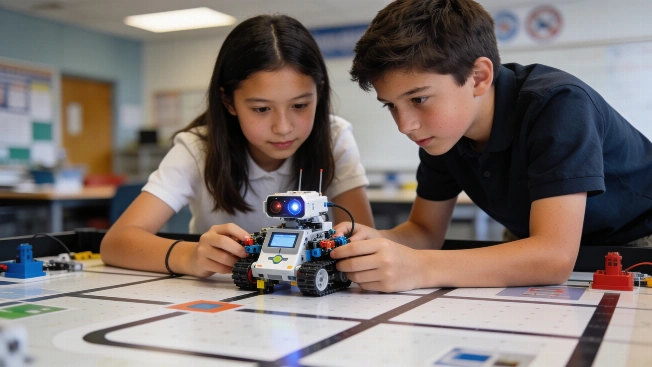
Student-Led Robotics: Botball's Approach to Autonomous STEM Education
Botball introduces standardized robotics kits and text-based coding to classrooms, requiring students to design, build, and program fully autonomous robots without adult intervention. The program's structure aims to equalize access and foster technical skills.