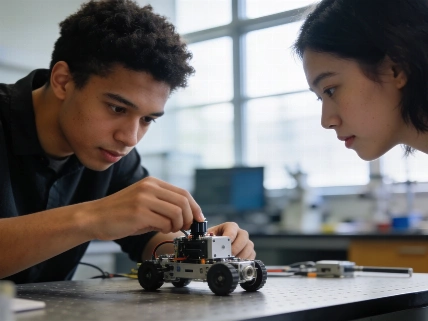
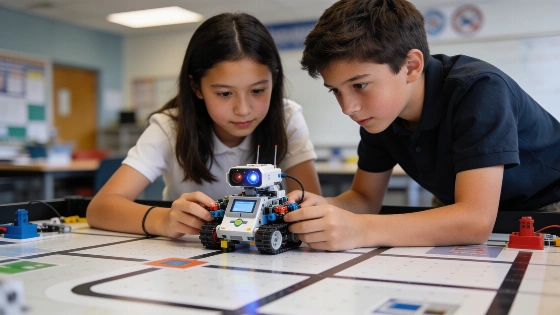
Botball introduces standardized robotics kits and text-based coding to classrooms, requiring students to design, build, and program fully autonomous robots without adult intervention. The program's structure aims to equalize access and foster technical skills.
Botball, an educational robotics program developed by the KISS Institute for Practical Robotics, is designed to bring autonomous robotics and real-world coding into primary and secondary classrooms. Unlike many robotics competitions that rely on adult-led teams or resource disparities, Botball enforces a strict student-led model. Every participating team receives an identical kit of hardware components, and competition rules prohibit adults from handling robots during events. This approach is intended to ensure that outcomes depend on student problem-solving and programming, not on external mentorship or school funding.
The Botball system requires students to build and program robots that operate entirely autonomously. Each robot must start in response to a light sensor and complete its tasks within a two-minute window, stopping automatically. The program's curriculum is integrated into the regular school day, rather than being limited to after-school clubs, which the organization says increases participation and reduces barriers for students who might otherwise be excluded from extracurricular activities.
Standardized Kits and Coding Requirements
All teams use the same standardized kit, which includes sensors, actuators, and a programmable controller. The software environment supports text-based programming languages such as C and Python, moving beyond the block-based interfaces common in many elementary robotics programs. According to the KISS Institute, pilot studies found that students as young as elementary age could engage with these languages when introduced in a structured, classroom-supported context. The curriculum treats coding as a language to be learned alongside spoken and written communication, aiming to build fluency through repeated, practical application.
To support iterative development and reduce the risk of hardware damage, Botball offers a virtual simulation platform called Botball Academy. This simulator allows students to test and refine their code in a physics-based environment before deploying it to physical robots. The organization reports that this "fail fast" approach encourages experimentation and learning from mistakes without the cost or downtime associated with damaged equipment.
Classroom Integration and Participation
The Junior Botball Challenge (JBC), a related initiative, shifts the focus from direct competition to collaborative problem-solving. In JBC, up to five students can simultaneously program and control different segments of code on a single robot using a specialized controller. This structure is intended to foster teamwork and distribute technical responsibility across the group, rather than concentrating expertise in a single student.
According to figures provided by the KISS Institute, integrating Botball into the classroom environment has led to a notable increase in participation among girls. While traditional extracurricular robotics competitions report female participation rates around 30%, the organization claims that JBC classrooms see rates exceeding 55%. This shift is attributed to the inclusive, curriculum-based model and the removal of after-school scheduling barriers.
Evaluation, Limitations, and Social Context
Botball's educational model is built on the principle of a "level playing field," but its effectiveness depends on consistent enforcement of student-only participation and equal access to resources. The program's reliance on standardized kits and text-based programming is intended to minimize disparities, but outcomes may still be influenced by variations in classroom support, teacher expertise, and school infrastructure. There is no independent audit of competition fairness or learning outcomes, and the evidence for long-term skill development is based primarily on internal reporting and pilot studies rather than peer-reviewed research.
While the program's simulation tools and classroom integration address some barriers to entry, they do not eliminate broader structural inequalities in education. Access to computing devices, reliable internet, and teacher training remains uneven across regions and school systems. The program's focus on autonomy and accountability may also present challenges for students with less prior exposure to robotics or programming, potentially requiring additional scaffolding to ensure equitable participation.
Botball's approach stands in contrast to traditional robotics education models that often mirror industrial assembly lines, assigning students to narrow roles such as builder, programmer, or manager. By requiring every team member to engage with both hardware and software, the program aims to develop "polymath" skills and foster collaborative, inquiry-driven learning. However, the absence of adult intervention during competition raises questions about the balance between independence and effective guidance, especially for younger or less experienced students.
As of 2026, Botball and the Junior Botball Challenge are active in multiple regions, with schedules and participation details available through the KISS Institute's official channels. The program continues to evolve, but independent evaluation of its educational impact and equity claims remains limited.
In robotics education, the distinction between automation and autonomy is critical. Automation refers to systems that follow predefined instructions, often with human oversight or intervention. Autonomy, as required by Botball, means that robots must sense, decide, and act without real-time human input during operation. This distinction shapes both the technical challenge for students and the educational value of the program. However, true autonomy in robotics is difficult to achieve and verify, especially in open-ended environments. In educational settings, autonomy is typically constrained by standardized tasks, limited sensor suites, and controlled environments, which may not fully reflect the complexities of real-world deployment.