
Proxima Centauri
2 reportsProxima Centauri is an astronomical object studied through its light, motion, composition, environment, and population context. Current understanding relies on formation history, spectral type, and population distribution, with uncertainty tracked across measurement, classification, and reconstruction.
A source-based view of Proxima Centauri considers stellar evolution; stellar spectra; and luminosity and temperature. The treatment of luminosity and temperature keeps distance or orbit estimates separate from model comparison until their assumptions and scales are compared; the conclusion remains provisional because limited viewing geometry and indirect measurements can leave competing explanations.
A source-based view of Proxima Centauri considers stellar evolution; stellar spectra; and luminosity and temperature. The treatment of luminosity and temperature keeps distance or orbit estimates separate from model comparison until their assumptions and scales are compared; the conclusion remains provisional because limited viewing geometry and indirect measurements can leave competing explanations.
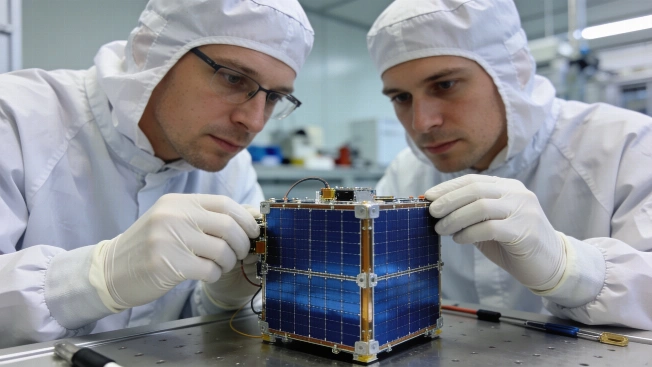
Fermi Explorer Mission Targets 2029 Launch Toward Alpha Centauri
A nonprofit group aims to send a low-cost probe to Alpha Centauri by 2029, marking the first directed interstellar mission. The journey would last 80,000 years, raising new questions about the feasibility and purpose of such long-term exploration.
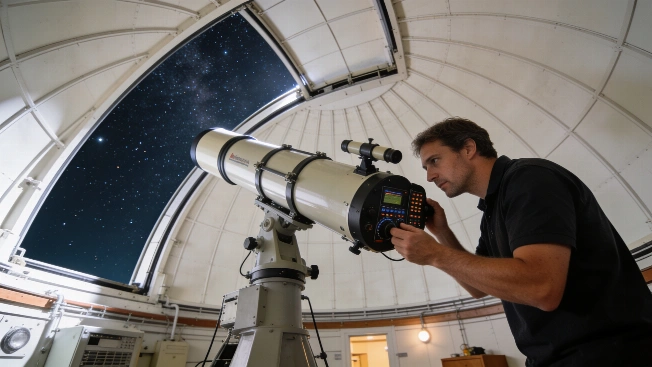
What a Parsec Really Measures in Astronomy and Why It Matters
Astronomers use the parsec to measure vast cosmic distances, relying on precise observations of stellar parallax to determine how far away stars are from Earth. The unit is central to mapping the Milky Way and beyond