
Lung Cancer
2 reportsLung Cancer is a medical condition studied through symptoms, mechanisms, diagnostic evidence, risk patterns, and progression. Reliable conclusions require disease progression, patient outcomes, and clinical symptoms, while early mechanisms or correlations cannot substitute for validated clinical outcomes.
The page treats survival and adverse-event outcomes; tumor biology; and screening and diagnosis as distinct parts of Lung Cancer. The analysis begins with biomarker validation for screening and diagnosis, and uses patient-centered outcomes to identify where the explanation succeeds or fails; the result is bounded by the possibility that association, early biomarkers, and laboratory findings do not always predict clinical benefit.
The page treats survival and adverse-event outcomes; tumor biology; and screening and diagnosis as distinct parts of Lung Cancer. The analysis begins with biomarker validation for screening and diagnosis, and uses patient-centered outcomes to identify where the explanation succeeds or fails; the result is bounded by the possibility that association, early biomarkers, and laboratory findings do not always predict clinical benefit.

3D Printed Modulator Delivers Carbon-Ion Dose in About 30 Seconds
In a lung-cancer planning study, a printed pin array shaped a single-energy carbon-ion beam; phantom measurements showed more than 99% target coverage, while delivery took about 30 seconds
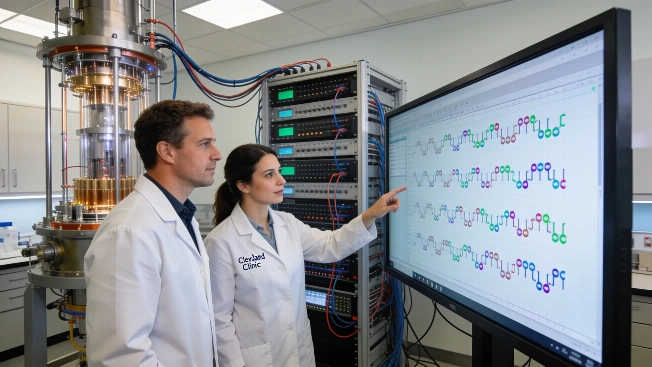
Quantum Neural Networks Tested for Cancer Neoantigen Prediction
A team at Cleveland Clinic and IBM Research implemented a quantum convolutional neural network on real quantum hardware to classify immunogenic cancer peptides and compare its performance with classical machine learning models.