
Juno Mission
2 reportsJuno Mission is a space mission that uses a spacecraft and scientific payload to investigate a defined target or physical environment. The project is evaluated through trajectory design, instrument calibration, and target body, separating design goals from capabilities demonstrated in operation.
The page treats trajectory design and instrument calibration, with separate attention to target body as distinct parts of Juno Mission. The account treats calibrated observations as evidence for instrument calibration and peer-reviewed mission results as a check on competing explanations; confidence is limited by the fact that prelaunch goals must be separated from measurements actually returned.
The page treats trajectory design and instrument calibration, with separate attention to target body as distinct parts of Juno Mission. The account treats calibrated observations as evidence for instrument calibration and peer-reviewed mission results as a check on competing explanations; confidence is limited by the fact that prelaunch goals must be separated from measurements actually returned.
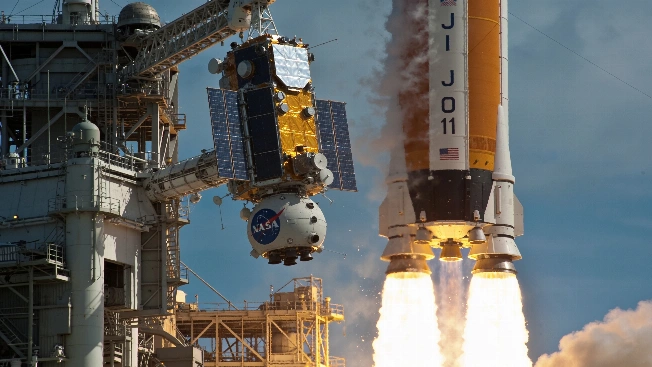
NASA's Juno Mission Transformed Jupiter Science After 2011 Launch
NASA's Juno spacecraft, launched in 2011 on an Atlas V rocket, reached Jupiter in 2016 and has since delivered unprecedented data and images, reshaping our understanding of the giant planet's atmosphere, magnetic field, and moons
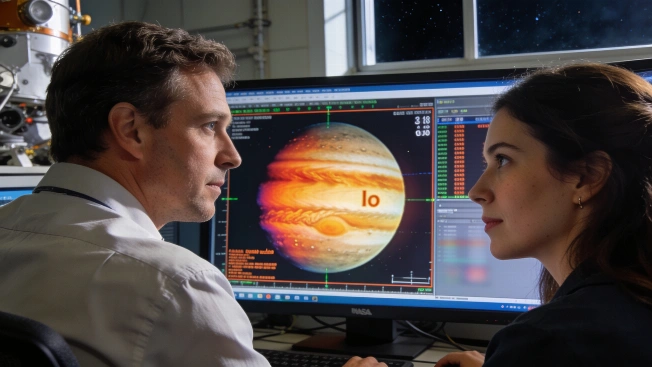
Juno Mission Probes Subsurface Heat on Jupiter's Volcanic Moon Io
NASA's Juno spacecraft has measured temperatures beneath Io's surface, revealing intense internal heating and unexpectedly smooth, low-density terrain. The findings, published in a peer-reviewed journal, offer new insight into tidal heating on active moons