
Glacier
4 reportsThe main lines of inquiry around Glacier include mass or area change; satellite and field measurements; and surface melt and dynamics. The analysis checks questions about surface melt and dynamics against instrument records and reanalysis products; the account does not overlook that short records, natural variability, and scenario assumptions can widen uncertainty.
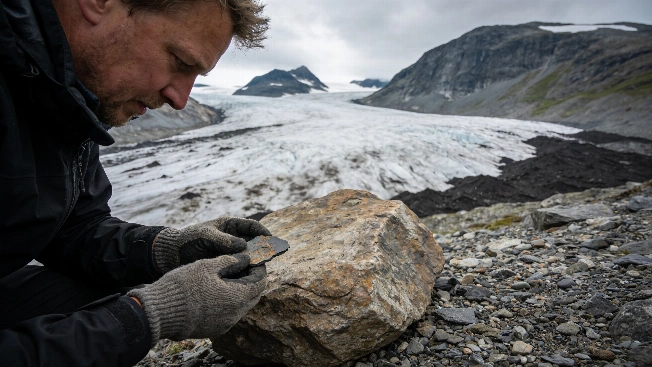
Stone Age Arrow Preserved in Norway's Retreating Ice
Archaeologists recovered 48 ancient arrows in Norway's Jotunheimen mountains, including a slate-tipped Stone Age arrow dated to roughly 5,000-6,000 years ago, with wood and binding materials preserved in the ice.
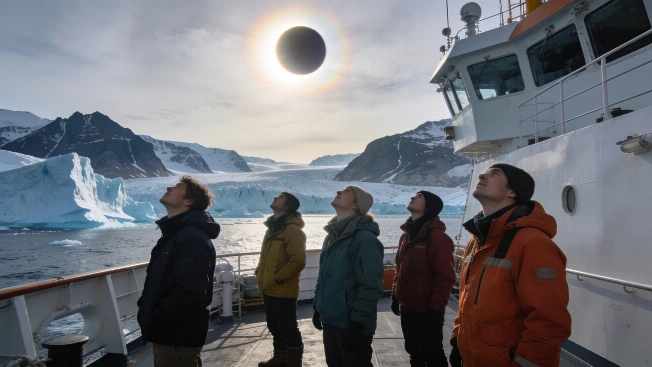
Total Solar Eclipse Observed Over Greenland's Remote Fjords
A rare total solar eclipse was observed from the deck of a research vessel in East Greenland, offering scientists and eclipse chasers a unique view of totality above icebergs and glaciers under clear Arctic skies
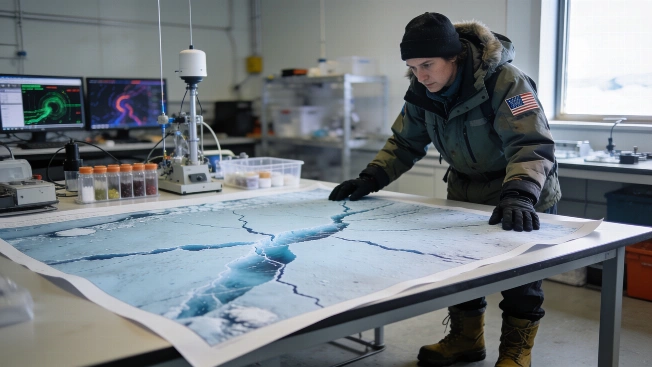
NISAR Satellite Data Reveals Antarctic Ice Fractures in Unprecedented Detail
NASA and ISRO have begun releasing data from the NISAR satellite's dual radar systems, offering researchers new insights into the movement and structure of Antarctic ice and other dynamic Earth surfaces
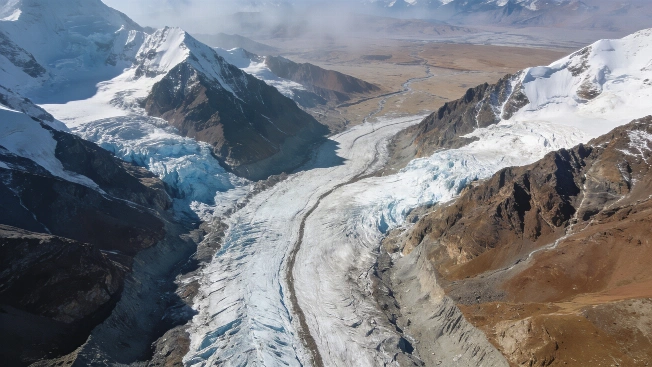
Glaciers Observed Flowing Down the Himalayas from Space
A NASA astronaut aboard the International Space Station captured detailed images of glaciers moving across the Himalayas, providing a rare perspective on the scale and dynamics of these ice flows as they descend toward the Tibetan Plateau