
Cultural Repatriation
2 reportsCultural Repatriation is a cultural heritage subject whose interpretation depends on provenance, conservation, legal status, and historical context. Reconstruction depends on digital documentation, conservation status, and provenance records, with provenance and stratigraphy used to separate evidence from later storytelling.
A source-based view of Cultural Repatriation considers conservation history, legal ownership, and scientific analysis. One line of support comes from archival records, and a separate test comes from material testing; together they clarify legal ownership, but the account does not overlook that missing provenance and contested ownership can restrict confident conclusions.
A source-based view of Cultural Repatriation considers conservation history, legal ownership, and scientific analysis. One line of support comes from archival records, and a separate test comes from material testing; together they clarify legal ownership, but the account does not overlook that missing provenance and contested ownership can restrict confident conclusions.
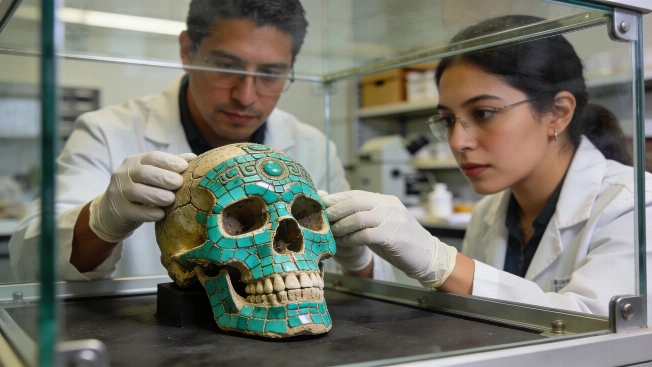
Mixtec Turquoise-Mosaic Skull Returns to Mexico After Six Decades
A rare pre-Hispanic human skull with a turquoise mosaic, linked to the Mixtec tradition, has been repatriated to Mexico after decades in a Dutch museum. Scientific analysis confirms its pre-Hispanic origin, but its precise archaeological context remains uncertain

Isotope and DNA Evidence Trace St. Helena Burials to West Africa
Researchers have analyzed teeth and DNA from over 150 individuals buried on St. Helena after liberation from slave ships, revealing diverse childhood origins across West and Central Africa and highlighting the scale of forced displacement