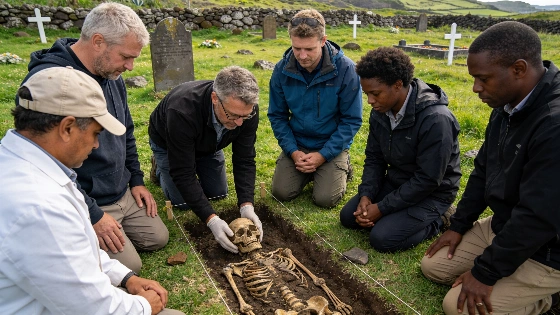
Researchers have analyzed teeth and DNA from over 150 individuals buried on St. Helena after liberation from slave ships, revealing diverse childhood origins across West and Central Africa and highlighting the scale of forced displacement
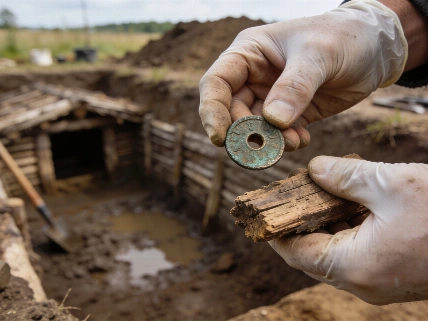
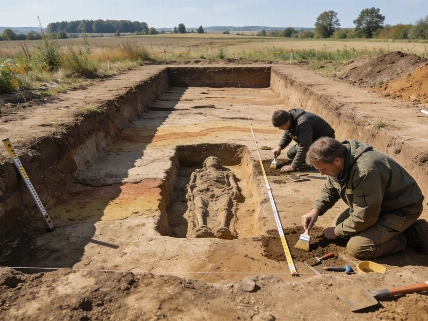
Archaeological and scientific analysis of human remains from St. Helena, a remote island in the South Atlantic, is providing new insight into the origins and experiences of thousands of Africans forcibly transported during the trans-Atlantic slave trade. Following the British Empire's 1807 ban on the slave trade, the Royal Navy intercepted slave ships and brought liberated captives to St. Helena. Many of these individuals, weakened by malnutrition and disease, died soon after arrival and were buried in mass graves that remained largely unstudied until their rediscovery during airport construction in 2007-2008.
Excavation and Sample Analysis
Excavations ahead of the airport project uncovered the skeletal remains of a significant number of these liberated Africans. A recent study focused on 152 individuals, analyzing their teeth to determine geographic origins using strontium isotope ratios. Strontium isotopes in tooth enamel reflect the local geology of the region where a person spent their childhood, as these isotopes are incorporated into teeth during development. By comparing these ratios to known geological signatures across Africa, researchers can estimate where individuals grew up.
In addition to isotope analysis, DNA was successfully extracted and sequenced from 20 individuals. Genetic data were compared to present-day African populations to further refine the likely regions of origin. The combination of isotopic and genetic evidence allows for a more nuanced reconstruction of the population's diversity and mobility prior to their forced embarkation.
Origins and Forced Movement
The strontium isotope results indicate that most individuals buried on St. Helena spent their early years in coastal or near-coastal regions of western Central Africa, with some originating from much farther inland. This pattern suggests that many captives were forcibly moved over hundreds or even thousands of kilometers before being loaded onto slave ships. In one case, isotopic differences between teeth formed at different ages in a single individual suggest a childhood relocation from inland Angola to the coast, likely associated with enslavement.
DNA analysis supports the isotope findings, showing genetic affinities with present-day populations in Gabon and northern Angola, but also revealing considerable diversity. Historical records from the period describe captives speaking multiple languages, consistent with the varied origins indicated by the scientific data. The evidence highlights the complexity of the slave trade's impact on African communities and the scale of displacement experienced by individuals who ended up on St. Helena.
Burial Context and Demographic Impact
Approximately 27,000 liberated Africans were brought to St. Helena between 1840 and 1872, with an estimated 8,000 dying on the island soon after arrival. The excavated burials represent only a fraction of the total, but provide a rare opportunity to study the biological and geographic backgrounds of individuals affected by the trans-Atlantic slave trade. Many of those who died were children or young adults, and at least 10 individuals in the study showed evidence of being relocated during childhood or adolescence.
The remains were reburied in 2022 following consultation with the local community and consideration of possible repatriation to African countries of origin. However, the diversity of origins and the difficulty of assigning individuals to specific modern nations complicated repatriation efforts. The study underscores the ethical challenges of handling human remains from colonial and traumatic contexts, as well as the importance of integrating scientific, historical, and community perspectives.
Interpreting the Evidence
While the combination of strontium isotope and DNA analysis provides powerful tools for reconstructing past mobility and ancestry, both methods have limitations. Strontium isotope signatures can often identify broad regions but rarely pinpoint exact locations, especially in geologically similar areas. DNA analysis is constrained by the availability of comparative data from present-day populations and by the preservation of ancient genetic material. The sample size for genetic analysis in this study was limited, and not all individuals yielded usable DNA.
Despite these challenges, the research offers a rare window into the lives of individuals whose personal histories were largely erased by the slave trade. The findings contribute to a growing body of evidence that forced displacement and childhood separation were common experiences for enslaved Africans, with long-term consequences for individuals and descendant communities. The study also demonstrates the value of integrating multiple lines of evidence to address questions of origin, mobility, and identity in the archaeological record.
Strontium isotope analysis is a method used in archaeology and bioarchaeology to investigate geographic origins and mobility. Strontium is a naturally occurring element found in rocks and soils, and its isotopic composition varies by region. When humans consume local food and water, the strontium isotopes are incorporated into their developing teeth and bones. By measuring the ratios of different strontium isotopes in tooth enamel, researchers can compare these values to geological maps and estimate where an individual spent their childhood. However, the method is most effective when combined with other evidence, such as DNA or historical records, and is limited by the resolution of available geological data and the potential for movement during childhood.