
Brown Dwarf
2 reportsBrown Dwarf is an astronomical object studied through its light, motion, composition, environment, and population context. Current understanding relies on spectral type, population distribution, and mass estimate, with uncertainty tracked across measurement, classification, and reconstruction.
Analysis of Brown Dwarf focuses on spectral type and population distribution, with separate attention to mass estimate. The account compares multiwavelength observations and distance or orbit estimates to determine which claims about spectral type are directly supported; limited viewing geometry and indirect measurements can leave competing explanations.
Analysis of Brown Dwarf focuses on spectral type and population distribution, with separate attention to mass estimate. The account compares multiwavelength observations and distance or orbit estimates to determine which claims about spectral type are directly supported; limited viewing geometry and indirect measurements can leave competing explanations.
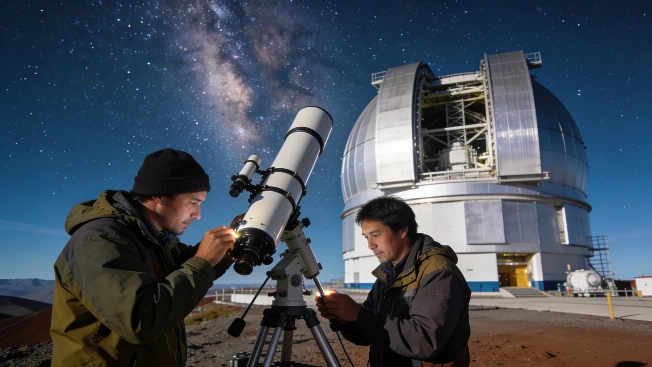
Possible Exomoon Candidate Challenges Definitions in Distant Star System
Astronomers using the Very Large Telescope have detected a moon-like object orbiting a brown dwarf in the CD-35 2722 system, raising questions about how to classify such bodies beyond our solar system
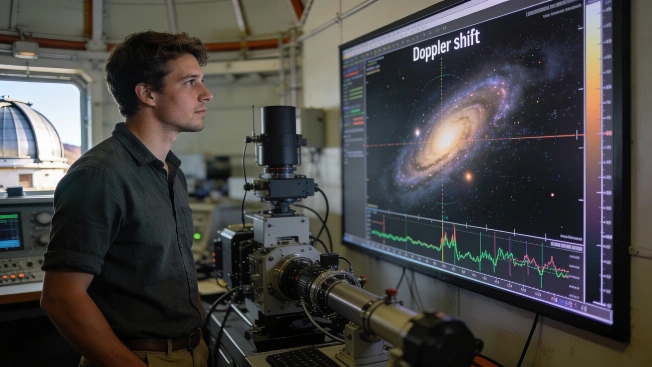
Giant Exosatellite Discovery Redefines Boundaries of Planetary Systems
Astronomers have identified a Jupiter-sized exosatellite orbiting a brown dwarf, itself in orbit around the star CD-35 2722. The finding, made using high-resolution spectroscopy, challenges current definitions of moons and planets.