
Air Pollution
3 reportsAir Pollution is an environmental phenomenon identified through monitoring, field observations, experiments, and ecological responses. Current understanding relies on monitoring indicator, exposure pathway, and ecological response, with uncertainty tracked across measurement, classification, and reconstruction.
Readers following Air Pollution encounter source pathways; environmental concentrations; and exposure and uptake. The account anchors exposure and uptake in field measurements and uses laboratory studies to test whether the pattern extends beyond one dataset; confidence is limited by the fact that uneven sampling and multiple interacting causes can complicate attribution.
Readers following Air Pollution encounter source pathways; environmental concentrations; and exposure and uptake. The account anchors exposure and uptake in field measurements and uses laboratory studies to test whether the pattern extends beyond one dataset; confidence is limited by the fact that uneven sampling and multiple interacting causes can complicate attribution.
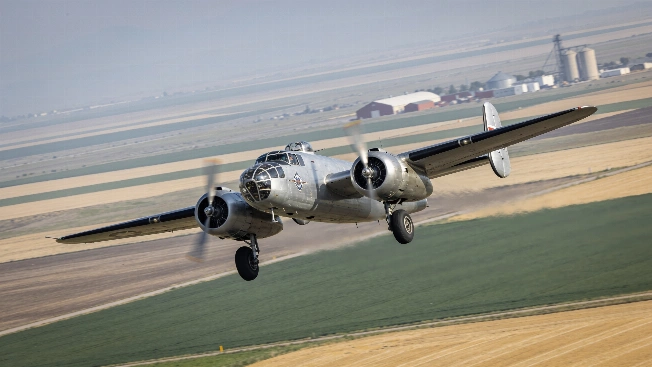
NASA Aircraft Will Track Farm Pollution Over Colorado
NASA's FarmFlux airborne campaign is planned to begin with low-altitude flights over Colorado farmland in fall 2026, measuring methane, ozone, ammonia, particulates and other pollutants while tracing nitrogen exchange between agricultural systems and the atmosphere.
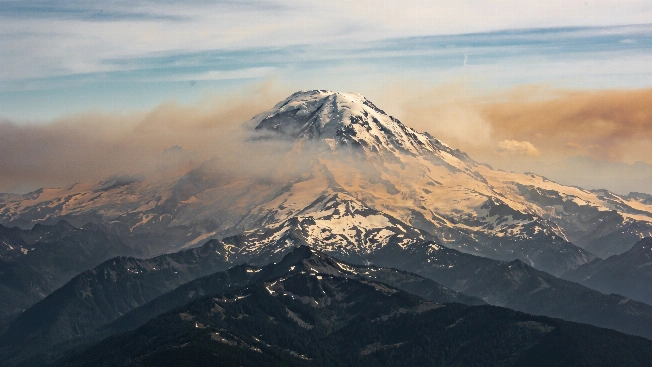
Wildfire Smoke from Space: ISS Images Pacific Northwest Volcanoes
Astronauts aboard the International Space Station have recorded extensive wildfire smoke blanketing Mount Rainier and other Cascade volcanoes, revealing the scale of ongoing fires in the Pacific Northwest as seen from orbit
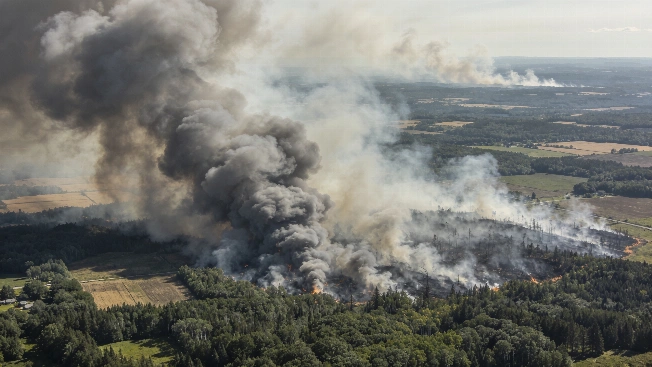
NOAA-21 Satellite Captures Canada Wildfire Smoke Spanning Continents
A NOAA-21 satellite image from July 14, 2026, reveals vast smoke plumes from over 850 wildfires in Canada, with thick haze drifting into the northeastern United States and raising air quality concerns across borders.