NASA's FarmFlux airborne campaign is planned to begin with low-altitude flights over Colorado farmland in fall 2026, measuring methane, ozone, ammonia, particulates and other pollutants while tracing nitrogen exchange between agricultural systems and the atmosphere.
A low-flying research aircraft is planned to begin NASA's FarmFlux campaign over farmland near Greeley, Colorado, in fall 2026. The Colorado deployment is described as an October operation in the current mission plan, although NASA has not published exact flight dates. Rather than relying only on modeled estimates, the flights are intended to measure how emissions from agricultural land and animal farms enter and move through the atmosphere.
FarmFlux will carry more than a dozen sensors designed to measure ozone, methane, ammonia, particulates and other pollutants. These instruments will record substances rising from agricultural areas and examine their interaction with the atmosphere. NASA characterizes the central scientific objective as studying the cycling of nitrogen between agricultural systems and the atmosphere, linking farm management and emissions to wider Earth-system processes.
The campaign is broader than the Colorado flights. NASA's FarmFlux mission page describes observations across agricultural regions extending from the Midwest to California's Central Valley, with animal farms and croplands included in the measurement strategy. Additional low-altitude research flights are planned over farmland near Amarillo, Texas, from late October to early November, followed by flights during the March-to-July 2027 growing season.
The planned 2027 phase is expected to use a NASA P-3 Orion aircraft over croplands in the Midwest and California's Central Valley. The different locations should provide observations from contrasting agricultural settings, but the publicly available mission information does not specify how sites will be statistically compared, which measurements will dominate each phase, or whether the campaign will produce a formally balanced sample across farm types.
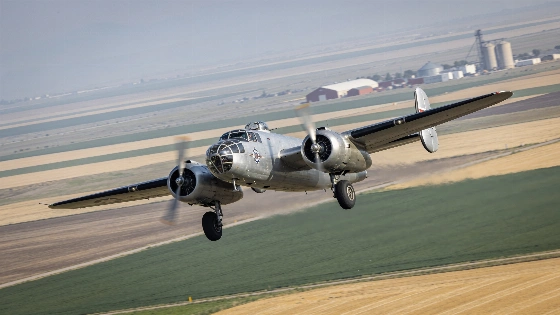
Dynamic Aviation's A200 aircraft will conduct the Colorado flights. A photograph supplied for the mission shows the two-engine aircraft outside a hangar, while the planned operation places it at low altitude over farmland near Greeley. NASA has not publicly specified the exact altitude, flight duration, individual instrument detection limits or sensor readouts for those flights.
That absence of results sets a clear boundary around what can be claimed now. FarmFlux is an observing campaign within NASA's Earth system research portfolio, not a completed findings report. The aircraft will collect measurements that researchers can later use to characterize emissions and atmospheric behavior; no verified post-flight outcome, pollutant concentration record or atmospheric-impact estimate is currently available.
Farm emissions are not limited to one gas or particle type. Methane is a potent greenhouse gas, ammonia is a reactive nitrogen compound, ozone is an atmospheric pollutant, and particulates are suspended solid or liquid material rather than a single chemical substance. Measuring these categories together can help investigators examine an interacting atmospheric mixture instead of treating each emission as an isolated source, although the mission pages do not yet report the analytical models or uncertainty estimates that will be applied.
FarmFlux is one of six airborne campaigns in NASA's 2026-2029 Earth Venture Suborbital-4 program. The EVS-4 program overview lists FarmFlux alongside FORTE, HAMAQ, INSPYRE, LACCE and SNOW4FLOW. This places the agricultural campaign within a coordinated NASA effort to obtain targeted observations that complement satellite records and other Earth-system measurements.
The mission is jointly led by NASA's Goddard Space Flight Center in Greenbelt, Maryland, Colorado State University and Boston University. Its scientific value will depend on measurement quality, spatial coverage and later analysis. Unlike a completed peer-reviewed Nature study, the current public material provides no sample-size calculation, p-values, confidence intervals or finalized laboratory results; those details can only be assessed after the observations and subsequent analyses are released.
More information about the campaign is available through the earlier analysis of how specialized observations can be reconstructed into physical measurements, although FarmFlux addresses atmospheric emissions rather than distant astrophysical jets.
The most defensible reading of the announcement is therefore straightforward: FarmFlux is building a direct observational record of agricultural pollution across several U.S. farming regions. The Colorado flights are an initial stage in a multi-year NASA campaign, and conclusions about emission amounts, atmospheric chemistry or environmental effects must wait for the measurements and their documented analysis.