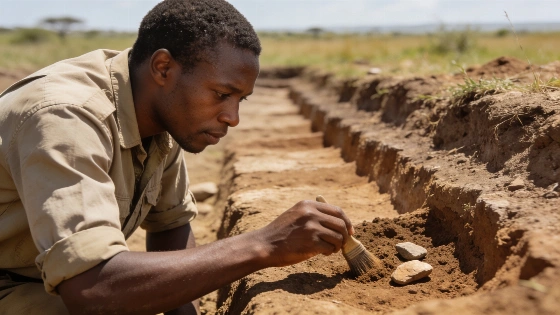
A two-month Polish-Tanzanian expedition documented human remains at a Neolithic pastoralist settlement and a nearly complete Pleistocene giraffe skull that may represent a species unknown to science
At Loiyangalani, some excavation areas measured ten meters on each side, giving researchers a wider view of archaeological layers than the one-meter-square trenches often used in the Serengeti. The first season of a Polish-Tanzanian project also recovered human remains at a settlement associated with Neolithic pastoralists and a nearly complete fossil giraffe skull. Professor Marta Osypińska of the University of Wrocław, who led the Polish team, said the scale of the discoveries had completely surprised the researchers.
The skull, accompanied by a radius bone, belongs to an extinct Pleistocene giraffe. Researchers say it could represent a species not previously known to science, but its identity has yet to be established. The finds broaden a regional archaeological record that has received relatively little systematic investigation. Polish reporting on the expedition described the giraffe's possible novelty as a hypothesis, not a confirmed species identification.
Human Remains
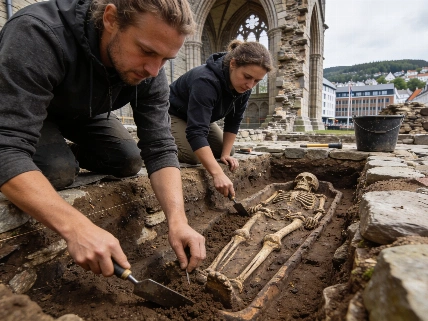
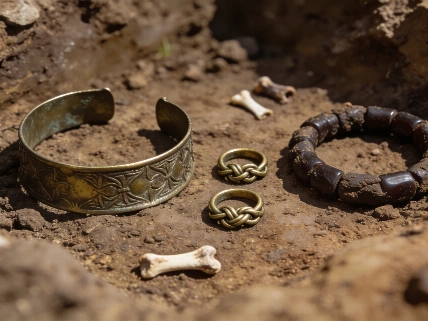
At the pastoralist settlement, archaeologists recovered several dozen human remains, including numerous teeth representing several individuals. Decades of archaeological research in the Serengeti had not previously identified human burials or cemeteries from any period. The discovery marks the first reported evidence of human remains in such a context in the region. Osypińska told the Polish Press Agency that the scale of the discoveries had completely surprised the team, as Polish coverage reported.
Laboratory study could provide evidence relevant to population history, health and diet. The remains may also help researchers investigate mortuary practices among Neolithic pastoralists. Their interpretation will depend on detailed study and the archaeological context in which the bones and teeth were found.
The Serengeti's archaeological record has received comparatively limited systematic investigation. Osypińska has described knowledge of the region's archaeology as very limited. Her team's findings add evidence from a pastoralist settlement to a field season that also expanded the recorded Middle Stone Age sites in this part of Tanzania.
Wider Excavations
Researchers initially planned work at two Middle Stone Age sites, then carried out rescue investigations at two more locations associated with the same period. Polish reports said the season increased the number of known Middle Stone Age sites in this part of Tanzania by 300 percent. The figure describes the increase in documented sites, not a change in the prehistoric population.
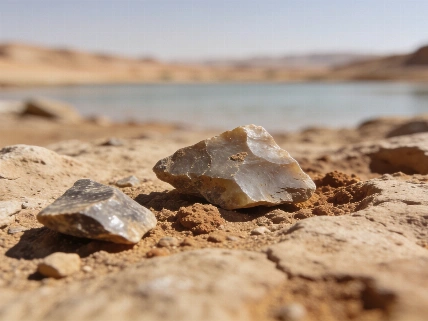
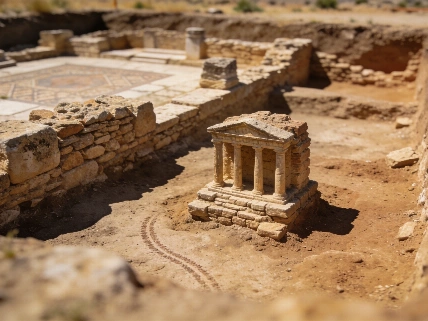
At Loiyangalani, described by the researchers as the only previously known Pleistocene archaeological site in this part of the Serengeti, the team opened areas measuring five by five meters and, in some cases, ten by ten meters. Earlier investigations often used trenches measuring one meter by one meter. The larger units let researchers examine stone artifacts, animal remains, pits, hearths and concentrations of artifacts across broader spatial and stratigraphic contexts, as WP Wiadomości reported.
The team also named a previously unexplored location Kiboko, the Swahili word for hippopotamus, after an encounter with a hippo on the first day there. Excavations yielded stone artifacts and well-preserved animal remains. Clear stratigraphy-the sequence of archaeological layers-offers a way to trace the order of activity at the site.
Objects and Interpretation
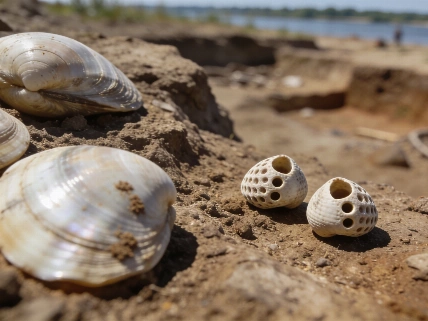
Some material from Kiboko may indicate that people in the Pleistocene made objects from turtle shells for purposes beyond everyday use. Researchers suspect that some could have served as ornaments. That interpretation remains tentative; if supported by further study, the objects would offer evidence relevant to personal decoration and symbolic behavior.
Identifying animal bones in the Serengeti also presents challenges. The region's biodiversity and similarities between the bones of different species make comparative expertise impressive. Studying remains in their original archaeological context can help researchers assess their identification.
The giraffe skull's preservation makes it valuable for examining Pleistocene giraffe diversity, but further study is needed to determine its precise classification. The human remains, animal fossils and other collected material have been sent to specialist laboratories in Europe and the United States.
Work Ahead
The project account said researchers expected to return to Tanzania in February 2027 for further analysis of stone artifacts and animal remains. The first season was carried out through two projects funded by Poland's National Science Centre. The University of Wrocław mission and the Institute of Archaeology and Ethnology of the Polish Academy of Sciences operated separately, sharing accommodation and logistics. Work also involved scientists from the University of Dar es Salaam, with support from the Tanzania Wildlife Research Institute and cooperation with Tanzania National Parks and the Frankfurt Zoological Society.
The Serengeti lies near the East African Rift, several dozen kilometers from Olduvai Gorge, where evidence of hominin activity extends back more than two million years. Previous research in the Serengeti, including work by Professor John Bower and later Professor Audax Mabulla, pointed to archaeological potential in the region. A separate account of archaeological work in Bukhara also shows how fragmentary material can preserve evidence about past communities, though the sites and periods differ. The Serengeti expedition's new remains and expanded site record are now awaiting detailed analysis.