At Uruq al-Julaybah, a reconstructed 340-square-kilometer lake and thousands of stone artifacts place human activity in wetter Arabia about 125,000 years ago; residues offer clues to tool use and plant processing
Microscopic, chemical and use-wear analyses of stone implements from Uruq al-Julaybah detected plant fibres, wood, resin and other organic residues, including compounds associated with a potentially toxic plant. The traces offer clues to how people processed plants and made or used tools around 125,000 years ago.
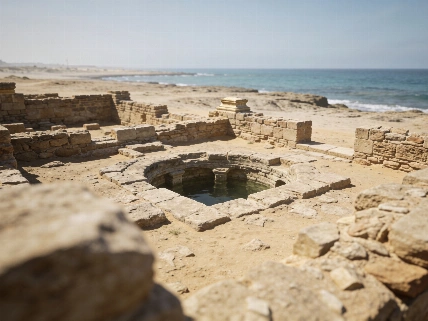
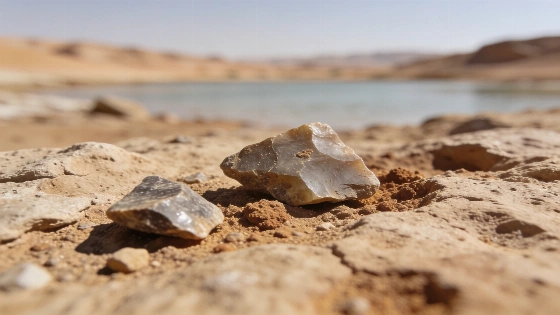
The site lies in the Mundafan basin of southern Saudi Arabia, in the Rubʿ al-Khali, now one of the driest regions on Earth. Researchers reconstructed a freshwater palaeolake that covered about 340 square kilometres and reached a maximum depth of roughly 29 metres. Its remains point to a freshwater environment bordered by vegetation and open grassland.
Lake evidence
The archaeological context dates to around 125,000 years ago, during the Last Interglacial, when a humid phase transformed parts of Arabia. The study, published in Science in November 2026, was led by Christopher Clarkson of Griffith University and involved the Saudi Heritage Commission, King Abdullah University of Science and Technology (KAUST) and international specialists. Clarkson described the site as a lakeshore in what is now one of the driest regions on Earth, as reported in KAUST's study account.
Researchers documented more than 500 plant and animal fossil specimens at over 130 locations. Hippopotamuses and extinct long-horned buffaloes were among the animals represented. Camels, Arabian oryx, gazelles and ostriches were also recorded, showing how different the lakeside ecosystem was from the modern desert.
Freshwater and nearby resources drew animals and human groups to the shore. Fossils, lake sediments and archaeological material occur within the same dated landscape context, allowing researchers to examine human activity alongside evidence of the environment. The findings contribute to the "Green Arabia" picture of humid periods when lakes, grasslands and vegetated corridors spread across parts of the peninsula.
Tools and plant traces
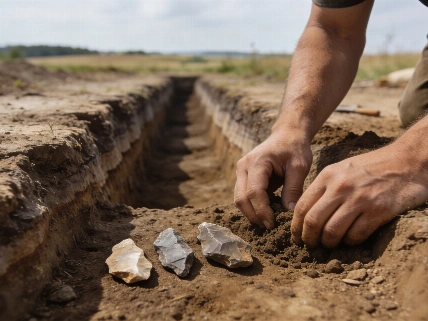
The principal study area yielded 5,511 stone artifacts larger than two centimetres. More than 98 percent were made from flint. The assemblage includes Levallois technology, in which a stone core is prepared to control the removal of flakes.
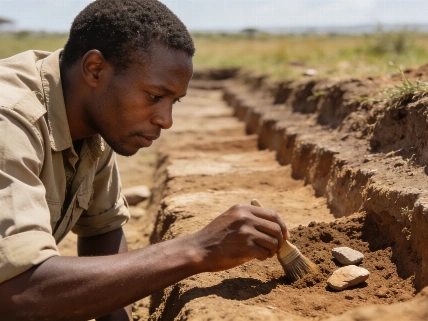
Residues and wear traces indicate that people processed tubers, shrubs, reeds and other underground plant parts. Other tools preserved fragments of leaves, wood and fibres, including bark and palm material; toothed edges are consistent with sawing or shredding plant matter. These traces point to plant processing alongside woodworking and hunting-related activities.
Resin and woody tissue on some implements indicate that stone points may have been attached to wooden shafts, forming composite weapons. Chemical testing also detected plant-derived compounds associated with Acokanthera schimperi, a species known for toxic compounds. The finding is evidence of possible exposure to plant toxins, but it does not establish how any substance was prepared or delivered, or whether it was effective. It therefore does not prove that poisoned arrows or darts were used.
The concentration of artifacts beside the palaeolake indicates human use of the lakeshore, while the study's combined archaeological, geological and biomolecular evidence offers a detailed view of activity during a humid phase of Arabia's past. The findings inform debates about how early Homo sapiens occupied and moved through the region between Africa and Asia.
The site adds to archaeological evidence for prehistoric tool use in different settings. A Middle Pleistocene tool assemblage reported from central Portugal belongs to a substantially older context; the two records offer separate views of human activity.