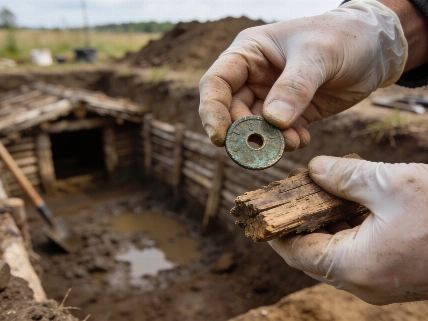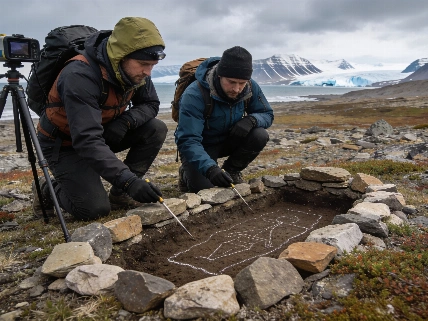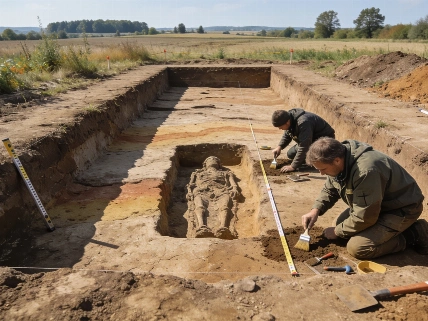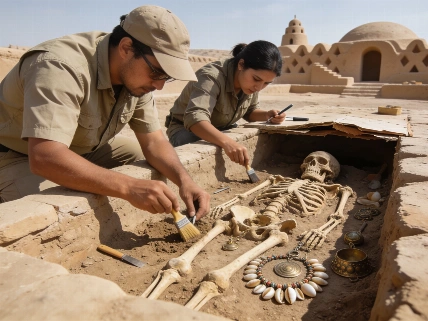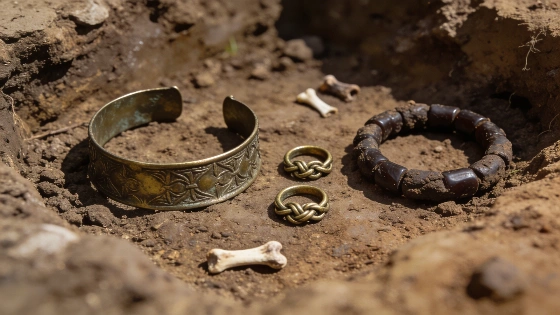
Recovered during development-led work at Senden, the burial contains heavy bronze anklets, a sapropelite bracelet and remains identified as a lamb or young goat. The woman's identity and the deposit's meaning remain unknown
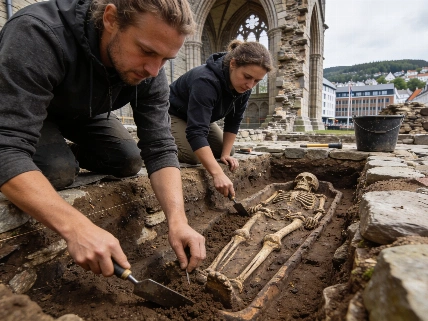
In Senden, archaeologists found a possible food offering beside the woman: the remains of a lamb or young goat. The grave was uncovered in 2024 during investigations ahead of commercial development along St.-Florian-Straße in Bavaria. It is described as more than 2,000 years old, placing it broadly within the Celtic Iron Age.
Ornaments in the grave
The burial also contained massive bronze anklets and a bracelet made from sapropelite, a hardened fossilized organic-rich sediment. Two bronze knot rings were among the other objects. The assemblage indicates careful funerary treatment, although the woman's identity and social position have not been established.
Archaeologists interpret the animal remains as a Speisebeigabe, or food deliberately placed with the dead. Whether it was intended as sustenance, used in a funerary ceremony or carried another meaning is unknown. The deposit offers evidence for investigating Celtic burial practices, but it cannot establish the woman's beliefs or the precise purpose of the offering.
Field and context
The grave is an individual find within a wider archaeological field. Excavations around Senden have recorded settlement evidence from the Celtic Iron Age into the Roman Imperial era. As with finds at Murujuga, the surrounding archaeological context helps researchers place recovered objects within a broader record of human activity.
The Bavarian State Office for Monument Protection (BLfD) has announced that objects from the grave are expected to be presented at a press conference in Senden on 30 October. The annual Archaeology in Bavaria conference is scheduled in Senden from 30 October to 1 November 2026. Its program includes findings from Bellenberg and Illertissen, along with ASTRAcker, or ArchaeoSurveyTracker, a digital system for recording archaeological sites and discoveries. The BLfD and the city of Senden are also expected to update plans for an archaeological finds repository in the protected Alte Weberei, or Old Weaving Mill.