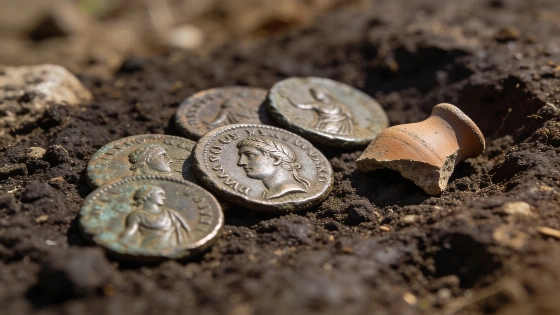
Coins from the Constantinian dynasty dominate a 737-piece assemblage recovered during community archaeology in Somogy County. Earlier finds include a silver issue of Antoninus Pius and coins bearing imperial religious imagery
On one coin, Emperor Aurelian is shown holding hands with Concordia, the Roman goddess of harmony and agreement. The piece is among 737 Roman coins recovered at three sites in western Hungary.
The finds came from community archaeology projects organized by the Rippl-Rónai Museum in Somogy County, information from HeritageDaily. Most of the coins date to the Constantinian dynasty of the fourth century CE, while others were issued centuries earlier.
Images of Imperial Power
Coins from the assemblage include issues of Antoninus Pius, who ruled from 138 to 161 CE, as well as Severus Alexander and Aurelian. Their designs carried imperial imagery across the empire and conveyed claims about authority and divine support.
Several coins issued under Probus, emperor from 276 to 282 CE, feature imagery associated with Sol Invictus. Other examples refer to Pax Augusti, or the peace of the emperor. These themes appeared during a period marked by military conflict and political instability.
A separate Science Report account of a Roman iron window grille at Augusta Raurica describes another kind of material evidence from Roman sites. The Somogy projects also recovered hundreds of pottery fragments, including terra sigillata, a fine red tableware traded across the empire.
Coins and Context
One unusual piece is a consecration coin believed to be associated with Claudius II, also known as Claudius Gothicus. He ruled from 268 to 270 CE and was deified after his death. Such coins commemorated emperors officially elevated to divine status.
The range of rulers represented spans several centuries. Because the finds came from separate locations rather than one deposit, their archaeological contexts are core to understanding how the coins accumulated at the sites.
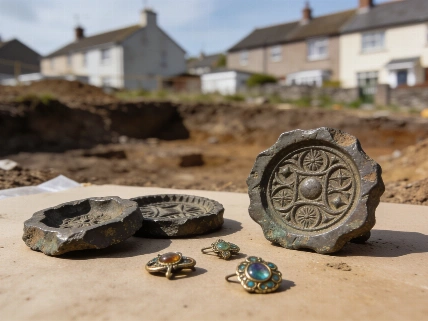
The sites lay within the Roman province of Pannonia. Coins can help establish when activity took place, while their dates and denominations may offer clues to economic change. Several fibulae, used to fasten clothing, were also recovered, along with a fragment of a scale that may relate to the weighing of goods.