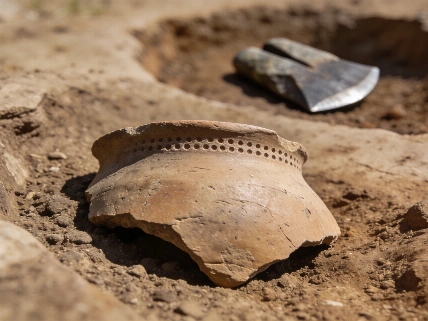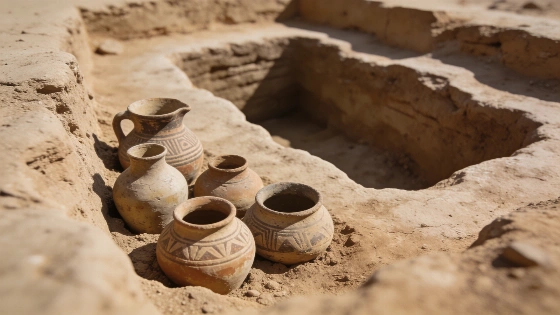
At Huaca de la Luna in northern Peru, archaeologists found 32 ceramic objects in a chamber sized for an adult. The toddler's sex is undetermined, while the rich burial suggests unusually high status.
The burial chamber was large enough for an adult, yet its occupant was a child no older than about two years. Archaeologists with the Huacas de Moche Archaeological Project of the National University of Trujillo recovered 32 ceramic objects and two metal artifacts from the tomb at the Huacas de Moche complex, beside Huaca de la Luna in northern Peru. The grave is an unusually rich child burial compared with others excavated in this part of the site.
The burial dates to the sixth or seventh century CE, in the later Moche period. One report gives the chamber's dimensions as approximately 1.20 metres long, 0.70 metres wide and 1.20 metres deep. An initial examination of the skeletal remains could not determine the child's sex. Project director Carlos Rengifo-Chunga and his team have described the child as potentially elite on the basis of the tomb's size, location and grave goods; the assemblage does not establish a particular title, family or political role.
Objects in the Tomb
Most of the 32 ceramic objects were vessels. One depicts a supernatural figure with a human-like body, bird wings and a bird tail. The figure holds a shield and goblet, while two ceremonially dressed birds appear nearby. Researchers have suggested the image may represent a transforming deity rather than simply a human-bird hybrid; the figure has not been assigned a definitive deity name.
Two ceramic vessels portray captives with ropes around their necks. Other pieces depict birds, combat, sacrifice and divine figures. The imagery features recurring Moche themes, but the deceased was under two years old, so the objects cannot straightforwardly be read as records of the child's own adult actions or achievements.
The interpretive problem is familiar in archaeology: a burial figure report likewise treated the figure's proposed identity as an interpretation. Here, researchers have suggested the grave goods could relate to the child's family or to beliefs about the child's social position. The objects alone do not settle their meaning.
Burial Context
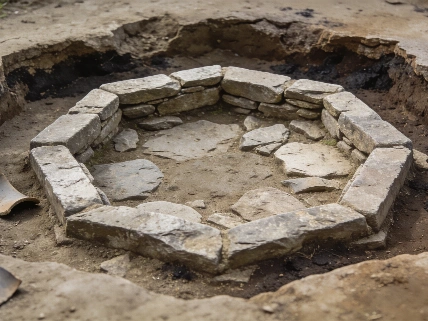
The tomb lies within the Uhle Platform, a mausoleum beside an area known as the Courtyard of the Snakes. More than 80 burials had previously been excavated in this sector. The newly reported grave is described as the only known burial of a child there with comparable funerary richness.
Huaca de la Luna formed one of the principal religious complexes of the Moche capital near modern Trujillo. Moche builders constructed monumental adobe platforms between approximately the third and ninth centuries CE, repeatedly covering older structures with new construction. The Uhle Platform's burials offer evidence of Moche funerary customs and social organization.
The Moche left no known written language, making the religious imagery difficult to interpret. Scholars continue to debate whether its many forms represented separate gods or a smaller number of supernatural beings able to take different forms.
What the Burial Shows
The chamber's adult-scale dimensions and rich contents support the interpretation that the child belonged to an impressive social group. The burial may also suggest that status could be inherited rather than earned through an individual's actions, although the grave cannot establish that on its own. The child's identity and the reason for the unusual treatment remain unknown.
The recovered objects were transferred to laboratories at the Santiago Uceda Castillo Museum for scientific examination and conservation. The Huacas de Moche Archaeological Project of the National University of Trujillo carried out the excavation.