Neutron-star collisions can fade from view within days. Kilonova Catcher brings telescope owners into rapid-response efforts when alerts arrive and no single observatory can watch the whole sky
On Aug. 17, 2017, LIGO and Virgo detected GW170817, the first gravitational-wave signal associated with the merger of two neutron stars. The event occurred about 130 million light-years away. Within hours, astronomers identified an optical counterpart, AT2017gfo, in the lenticular galaxy NGC 4993. It was the first time gravitational waves and light had been observed from the same cosmic collision.
Ground-based observatories identified the new optical and infrared light before Hubble recorded the counterpart as it faded. NASA's Chandra X-ray Observatory described how the gravitational-wave detection and accompanying gamma-ray burst prompted astronomers to search for the aftermath. The event showed how coordinated gravitational-wave, gamma-ray, optical and infrared observations can capture a transient that changes rapidly.
A Narrow Search Window
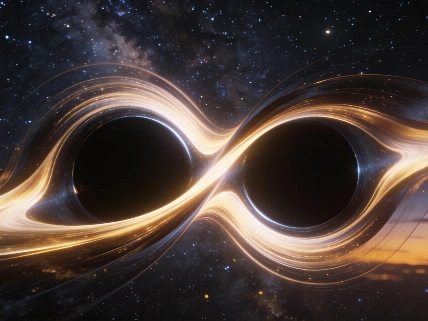
A kilonova is a brief flash of light released when neutron stars collide. These events forge heavy elements, including gold and platinum, but their light fades over a short period. Astronomers must quickly narrow down the region flagged by an alert and follow it with telescopes across different wavelengths.
Observations of GW170817 helped establish what that rapid follow-up can reveal. The Antarctic Survey Telescopes at Dome A reported optical observations of the event in NGC 4993, with data consistent with kilonova models. Other teams, including observers using SALT and facilities of the South African Astronomical Observatory, followed AT2017gfo during its first 10 days. A NASA Chandra account describes the multi-observatory response to the 2017 event.
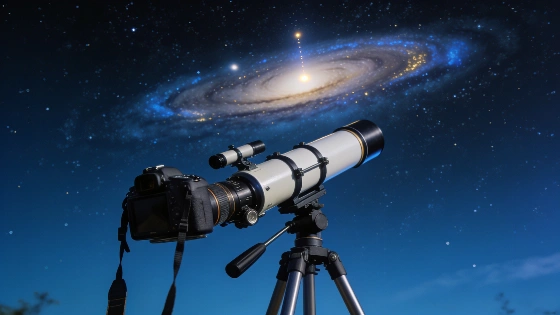
No single observatory can monitor the entire sky or provide uninterrupted global coverage. Kilonova Catcher links amateur astronomers with professional researchers, who coordinate observations of locations flagged by gravitational-wave detectors and space telescopes. Telescopes in different places can extend follow-up when a target is out of view at another site.
Volunteers On Alert
The network also follows gamma-ray bursts and other short-lived cosmic events, not only possible neutron-star mergers. It is part of the broader GRANDMA observing collaboration, which brings professional facilities and citizen astronomers together to monitor transients. The project reports more than 150 registered members across several continents, and says volunteers have contributed to more than 64 official reports shared through NASA's General Coordinates Network.
Those reports document observations and the equipment used. In NASA GCN Circular 46318, the GRANDMA/Kilonova-Catcher collaboration described follow-up of GRB 261029A, detected by instruments including Fermi/GBM, SVOM, GECAM-B and Glowbug. The circular identifies observations made with a T11 telescope operated by M. Freeberg and a CDK17 telescope at AITP San Pedro Chile Observatory operated by R. Hellot. The NASA GCN circular lists the observations and collaboration members.
Some volunteers have been named as authors on peer-reviewed research papers for their observations. They also took part in NASA's lunar Impact Flash! campaign during the Artemis II mission, recording flashes made when meteoroids struck the Moon.
Observations In Context
The project is co-led by Cristina Andrade, head of operations, and Principal Investigator Dr. Damien Turpin, a researcher at CEA/Irfu. Andrade is a research scientist at the University of Minnesota's Institute for Astrophysics. Volunteers work alongside professional astronomers and observatories, contributing telescope time and observations to the follow-up effort.
A separate event in Andromeda involved a low-mass companion spiraling into a supergiant; an earlier report on Webb observations traced that process, which differs from a neutron-star collision.
The 2017 Record
In the 2017 event, LIGO and Virgo detected gravitational waves on Aug. 17. Hubble observations showed the kilonova fading over six days, with images from Aug. 22, Aug. 26 and Aug. 28 documenting its decline. Independent observations from Dome A and other facilities added optical measurements that astronomers compared with kilonova models.
Gravitational-wave alerts give telescope teams a trigger for follow-up. Volunteers then search the indicated part of the sky for the brief optical light associated with the event, while coordinated observations help track how the transient changes over time.