A solar flare releases enormous energy as magnetic fields reconnect. Physicists have now described a mathematical counterpart in gravity, while simulations and gravitational-wave observations are still needed to test its role
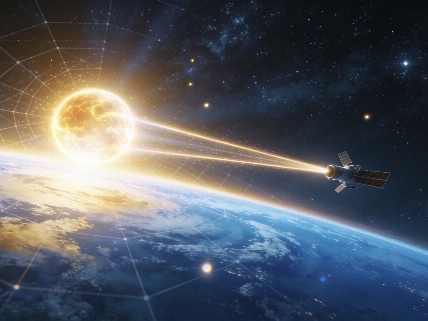
A solar flare can release in minutes energy comparable to ten million volcanoes erupting at once. Magnetic reconnection helps explain that sudden release, and a framework developed by physicists proposes a related process in gravity.
The Plasma Analogy
In an ideal plasma, electrical conductivity ties the magnetic field to the moving matter. Magnetic flux is conserved, so field lines move with the plasma and keep their connections as they stretch or twist. In real plasmas, resistivity can disrupt that condition. Lines can then reconnect in a new arrangement, releasing energy stored in the magnetic field.
This process is associated with solar flares and contributes to auroras on Earth. The gravitational proposal borrows the underlying idea of preserved connectivity, rather than claiming that gravity and electromagnetism are the same physical force. Its mathematical construction uses quantities derived from Einstein's equations as analogues of electromagnetic fields.
Sheets in Spacetime
In their paper Reconnection of Gravitational Fields, published in Physical Review D, Luca Comisso of Columbia University and Felipe A. Asenjo of Universidad Adolfo Ibáñez develop the analogy from Einstein's equations. The article appears in volume 114, issue 8, as article 084095; its preprint is arXiv:2609.25241. The Physical Review D record lists the publication details.
The work builds on an earlier study with Maricarmen A. Winkler on an ideal gravitational Ohm-type condition and its topological constraints, published in Physical Review Letters in 2026 (volume 136, article 161401). The new paper extends that ideal-transport framework to describe how field connectivity could change.
General relativity can be expressed using quantities that resemble electromagnetic fields. The researchers show that, under an ideal Ohm-type condition, gravitational flux is conserved even when space-time is curved. They also find that gravitational helicity-the twist and interlinking of the field structures-remains conserved under that condition. The preprint is indexed as arXiv:2609.25241.
These structures are not material strands. In four-dimensional space-time, they are sheets: following a field line through time traces a surface. If the ideal condition breaks down, the sheets may change their connections. Comisso and Asenjo call this proposed process gravitational reconnection.
The paper presents a mathematical framework, not an observation of gravitational sheets reconnecting in an astrophysical event. It identifies conditions under which the change could occur and describes how a non-ideal term could alter the associated helicity and the exchange of energy and momentum between matter and gravity.
Testing the Proposal
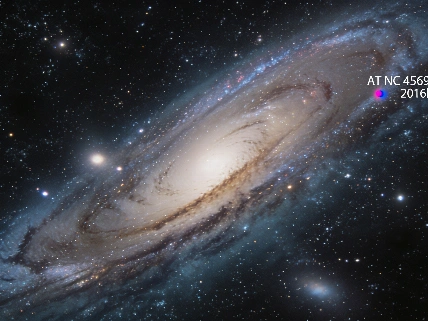
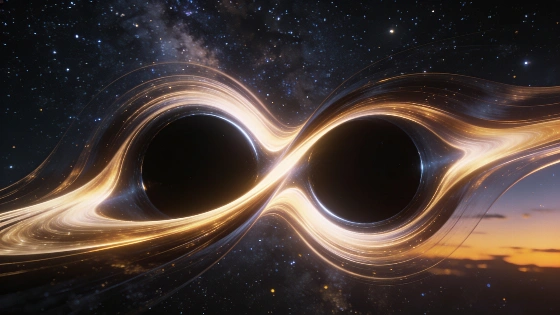
The possible relevance reaches events where gravity becomes strongly nonlinear. The researchers discuss black-hole mergers and core-collapse supernovae; neutron-star collisions are another setting raised in their analysis. Comisso and Asenjo previously studied electromagnetic magnetic reconnection as a possible means of extracting energy from rotating black holes in a 2021 Physical Review D paper. That plasma process is distinct from the proposed reconnection of gravitational field structures. A separate report on a possible compact companion to AT 2016blu concerns material transfer, a different process that does not test gravitational reconnection.
Numerical relativity already lets physicists simulate extreme changes in space-time, but the proposed connection to such events has yet to be established. A first test would track gravitational field reconnection in simulations and check whether its measured rate converges as numerical resolution improves. Without that convergence, the apparent rate could reflect a computational artefact rather than the underlying physics.
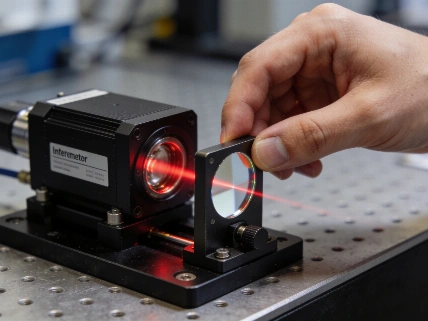
The researchers also propose looking for a reconnection-related feature in gravitational-wave signals detected by instruments such as the Laser Interferometer Gravitational-Wave Observatory (LIGO). The paper lays out a theoretical framework; establishing the proposed mechanism's role in astrophysical events depends on simulation tests and a distinct, traceable signature in gravitational-wave data.