
Peer Review and Preprints
5 reportsEditorial screening and author revision frame the reporting, with publication status providing a further check. It examines how conflicts are disclosed and what peer review checks, showing how sampling, measurement, and analytic choices alter uncertainty.

IonQ Hardware Tests Quantum Optimization for Gas Networks
Classiq and Israel Natural Gas Lines used hybrid quantum-classical optimization to search gas pipeline pressure settings. IonQ Forte-1 produced physically valid candidates close to the classical optimum, but the feasibility test did not demonstrate quantum advantage.
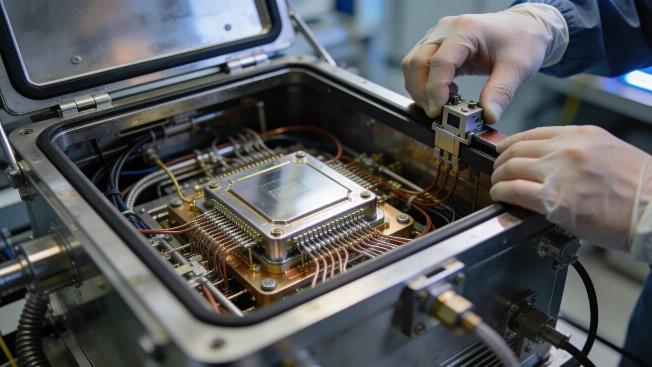
Q-CTRL Outperforms IBM Error Suppression on 156-Qubit Heron
An arXiv benchmark on IBM's 156-qubit Heron processor finds Q-CTRL led exact-output sampling while Qedma delivered the lowest estimator error at a much higher QPU time cost
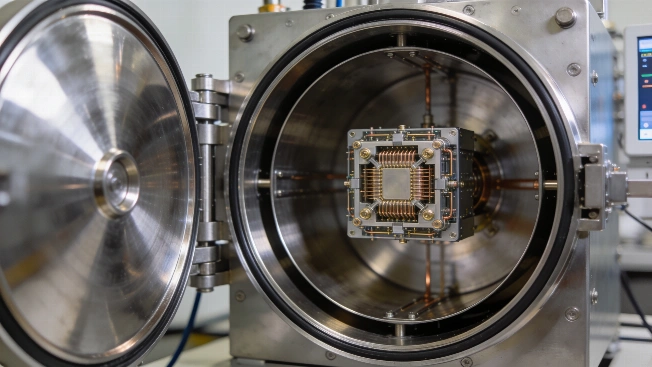
Q-CTRL Executes a 100-Qubit Quantum Fourier Transform
Q-CTRL has run a functional Quantum Fourier Transform on up to 100 physical qubits in an IBM Heron R3 processor while testing a compilation method designed to limit routing and noise.

How Bell's Theorem Emerged from an Unusual Physics Journal
John Bell's 1964 theorem on quantum nonlocality was first published in a short-lived journal with an unconventional editorial model. The story of this publication highlights the challenges of peer review, editorial selection, and scientific recognition in quantum physics

AI-Generated Content Challenges Scientific Integrity in Physics Publishing
The rise of large language models is introducing fabricated references and unverifiable data into scientific literature, forcing physicists to scrutinize sources and reinforce core research skills to maintain trust in published results