
Wastewater Treatment
1 reportWastewater Treatment is a sustainability solution evaluated through environmental performance, cost, durability, and system-wide tradeoffs. Claims about capability are tested through equity effect, lifecycle assessment, and implementation cost, with attention to scale, failure modes, comparability, and operating conditions.
The most informative angles on Wastewater Treatment involve resource use and life-cycle impacts, with separate attention to economic constraints. The account uses life-cycle assessments to define the observation and comparison with existing systems to test its interpretation in relation to life-cycle impacts; confidence is limited by the fact that benefits can shift when supply chains, rebound effects, and local conditions are included.
The most informative angles on Wastewater Treatment involve resource use and life-cycle impacts, with separate attention to economic constraints. The account uses life-cycle assessments to define the observation and comparison with existing systems to test its interpretation in relation to life-cycle impacts; confidence is limited by the fact that benefits can shift when supply chains, rebound effects, and local conditions are included.
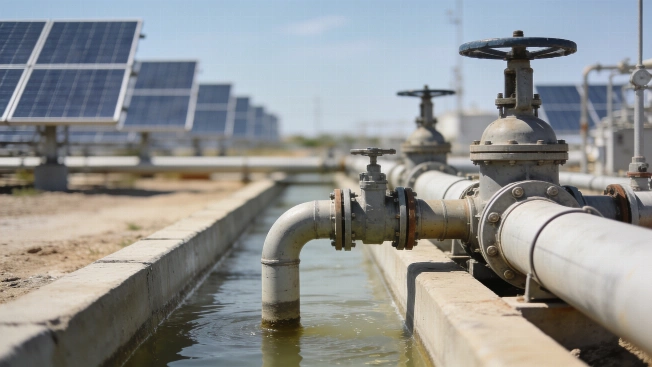
Solar reverse osmosis offers the cheapest route for brine
A new structure compares solar-powered treatment with disposal for brine from a Texas desalination plant and wastewater from the Permian Basin oilfields. The most cost-effective option depends on the waste stream.