
Spitzer Space Telescope
3 reportsSpitzer Space Telescope is a space telescope that collects radiation with calibrated optics and detectors across a defined wavelength range. Performance and scientific value are assessed through spectral coverage and instrument calibration, with calibration and engineering limits shaping the usable evidence.
Understanding Spitzer Space Telescope requires attention to survey data products, together with spectral or imaging analysis and archive-based discoveries. The account follows instrument characterization as the direct record and independent analyses as the broader comparison for archive-based discoveries; the account does not overlook that sensitivity, resolution, and selection effects constrain interpretation.
Understanding Spitzer Space Telescope requires attention to survey data products, together with spectral or imaging analysis and archive-based discoveries. The account follows instrument characterization as the direct record and independent analyses as the broader comparison for archive-based discoveries; the account does not overlook that sensitivity, resolution, and selection effects constrain interpretation.
Webb Traces Planet Shattering Collisions Around Young Stars
James Webb and Spitzer observations of 21 rare extreme debris disks show how mineral fingerprints distinguish Mars-scale planetary impacts from smaller collisions that reshape young stellar systems
Algol's Blinking Eye Reveals an Eclipsing Star System
Algol appears to blink because two stars regularly eclipse each other. NASA's TESS data records the change while Perseus and the Witch Head Nebula add darker targets to October's night sky.
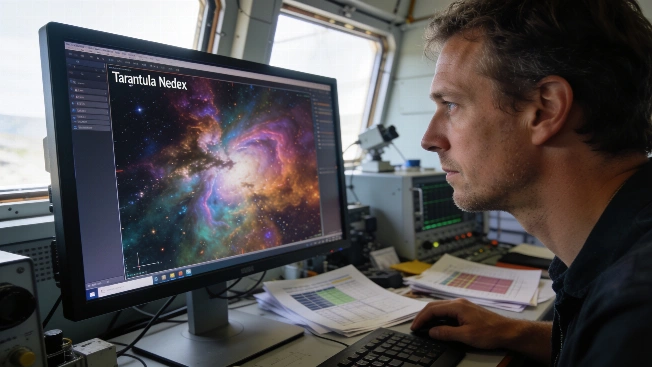
NASA Telescopes Map Energy Loss in Tarantula Nebula
A composite image from Chandra, Webb, and Hubble reveals how the Tarantula Nebula in the Large Magellanic Cloud is shaped by young stars and energetic gas, offering new insight into star formation and nebular evolution