
Measurement Error
2 reportsMeasurement Error is a statistical measure used to summarize data, estimate uncertainty, compare groups, or test a model-based claim. The method is judged through bias property, estimator, and confidence interval, especially where design choices change uncertainty or causal interpretation.
Research connected with Measurement Error is followed through comparison with alternatives; interpretation in practice; and definition and calculation. Judgments about interpretation in practice are tied to sensitivity to assumptions and simulation studies rather than prominence or repetition; the evidence cannot remove the concern that a summary measure can hide heterogeneity, bias, or model misspecification.
Research connected with Measurement Error is followed through comparison with alternatives; interpretation in practice; and definition and calculation. Judgments about interpretation in practice are tied to sensitivity to assumptions and simulation studies rather than prominence or repetition; the evidence cannot remove the concern that a summary measure can hide heterogeneity, bias, or model misspecification.
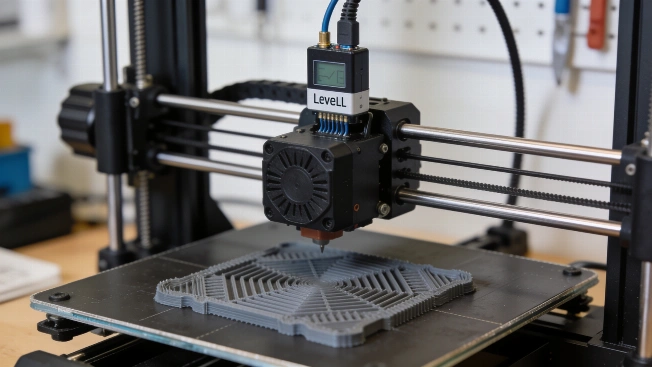
Bed-Leveling Sensors Tested for Automated Pressure Advance in 3D Printing
Researchers have explored whether standard bed-leveling sensors in FDM 3D printers can be repurposed to automate pressure advance calibration, a process critical for consistent extrusion during variable-speed printing tasks

GE Aerospace GEnx-1B Engine Logs 50 Million Flight Hours Milestone
GE Aerospace reports its GEnx-1B engine, used on Boeing 787 Dreamliners, has surpassed 50 million flight hours with a developer-claimed 99.98% dispatch reliability, raising questions about real-world performance and operational limits