
Fourier Transform
3 reportsFourier Transform is a mathematical concept defined through precise objects, relations, assumptions, and logical consequences. The concept is evaluated through computational method, axiomatic basis, and geometric interpretation, keeping formal definitions and assumptions separate from observations or consequences.
Scientific questions about Fourier Transform are framed by canonical examples; applications and limitations; and formal definitions. Conclusions concerning canonical examples remain tied to counterexamples or limiting cases, explicit assumptions, and transparent methods; the evidence is read with the caveat that intuitive analogies can fail when definitions or domains change.
Scientific questions about Fourier Transform are framed by canonical examples; applications and limitations; and formal definitions. Conclusions concerning canonical examples remain tied to counterexamples or limiting cases, explicit assumptions, and transparent methods; the evidence is read with the caveat that intuitive analogies can fail when definitions or domains change.
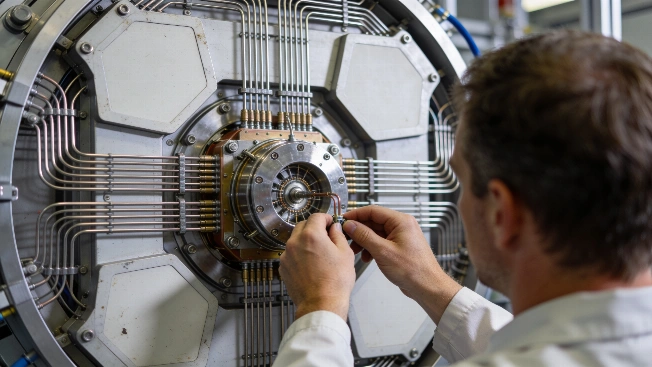
Shor's Algorithm Faces a Patent Eligibility Test
Shor's algorithm could threaten RSA by factoring large integers through quantum period finding. Yet a patent claim covering the method may struggle under current US eligibility rules
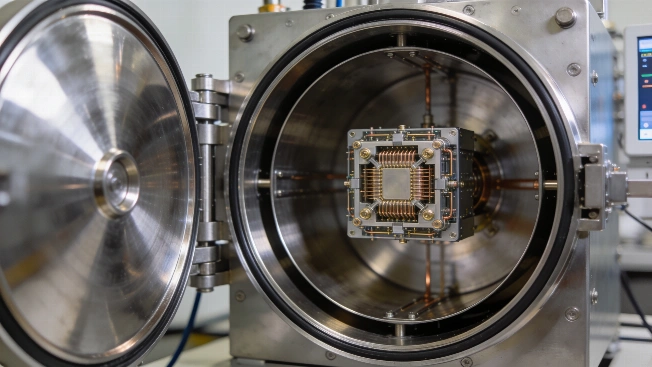
Q-CTRL Executes a 100-Qubit Quantum Fourier Transform
Q-CTRL has run a functional Quantum Fourier Transform on up to 100 physical qubits in an IBM Heron R3 processor while testing a compilation method designed to limit routing and noise.
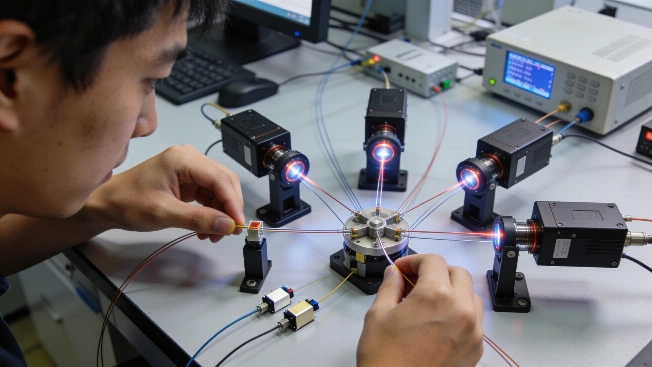
Nanjing Team Brings Asynchronous Quantum Conferencing to 59.6 dB Loss
Nanjing University has demonstrated a three-user measurement-device-independent quantum conferencing network that retains O(η) loss scaling and uses timestamped event pairing and software phase correction instead of global laser locking.