
Euclid Mission
2 reportsEuclid Mission is a space mission that uses a spacecraft and scientific payload to investigate a defined target or physical environment. The project is evaluated through launch window, science data products, and science payload, separating design goals from capabilities demonstrated in operation.
The evidence base around Euclid Mission is examined through archive-based discoveries and observing programs, with separate attention to instrument calibration. To distinguish observation from inference, reporting sets peer-reviewed mission results beside telemetry in the discussion of observing programs; the account does not overlook that prelaunch goals must be separated from measurements actually returned.
The evidence base around Euclid Mission is examined through archive-based discoveries and observing programs, with separate attention to instrument calibration. To distinguish observation from inference, reporting sets peer-reviewed mission results beside telemetry in the discussion of observing programs; the account does not overlook that prelaunch goals must be separated from measurements actually returned.
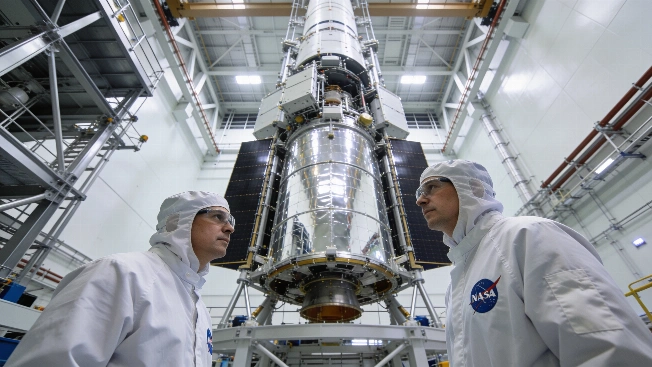
NASA's Roman Space Telescope Set for Launch to Map Distant Cosmos
NASA's Nancy Grace Roman Space Telescope is scheduled to launch from Florida, aiming to investigate exoplanets, dark matter, and distant galaxies with a wide-field infrared observatory. Its first science images are not expected until 2027
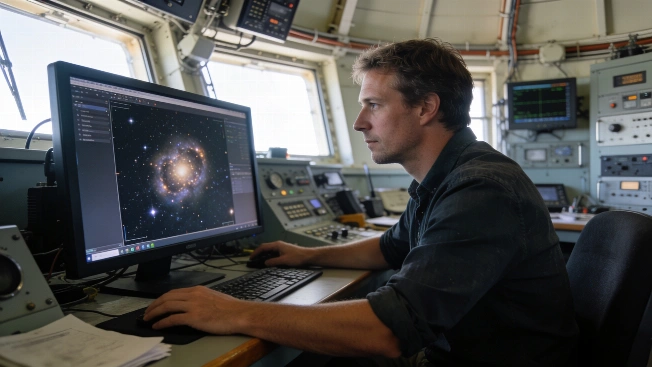
Milky Way's Oldest Known Merger Leaves Lasting Mark at Galactic Center
Astronomers have identified evidence of the Milky Way's earliest known galactic merger, using Hubble Space Telescope data to trace ancient globular clusters and reveal a collision that shaped the galaxy's core nearly 12 billion years ago