
Electrolyte
1 reportElectrolyte is a chemical concept used to describe composition, bonding, energy, structure, equilibrium, or molecular behavior. The concept is evaluated through chemical definition and thermodynamic relation, keeping formal definitions and assumptions separate from observations or consequences.
Coverage distinguishes how spectroscopic or computational evidence; reaction behavior; and applications and limits shape the interpretation of Electrolyte. Judgments about reaction behavior are tied to spectroscopic data and thermodynamic or kinetic measurements rather than prominence or repetition; the conclusion remains provisional because idealized models may not capture solvent, impurities, or real operating conditions.
Coverage distinguishes how spectroscopic or computational evidence; reaction behavior; and applications and limits shape the interpretation of Electrolyte. Judgments about reaction behavior are tied to spectroscopic data and thermodynamic or kinetic measurements rather than prominence or repetition; the conclusion remains provisional because idealized models may not capture solvent, impurities, or real operating conditions.
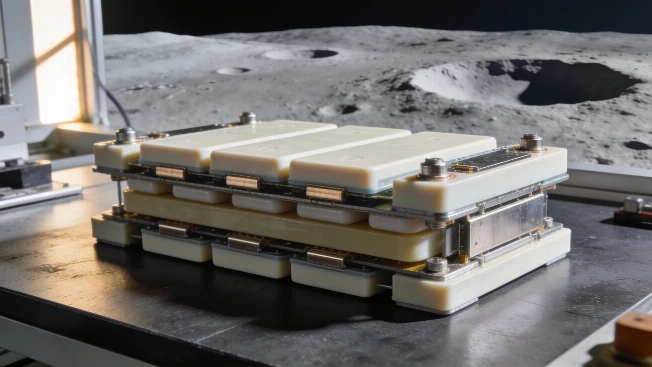
NASA Batteries Survive Cooling to -170°C
NASA-developed battery cells remained undamaged after cooling to -170°C and retained capacity when warmed. Tests also found useful operation from -60°C to 80°C, a range aimed at extreme lunar and terrestrial settings.