
3D Bioprinting
1 report3D Bioprinting is a medical treatment evaluated for benefit, harm, appropriate use, and the quality of supporting clinical evidence. Clinical interpretation draws on adverse events, mechanism of action, and dose response, and must separate laboratory findings, observed associations, and controlled human evidence.
3D Bioprinting is approached through adverse effects, while also considering durability of response and mechanism of action. The account anchors mechanism of action in randomized trials and uses long-term follow-up to test whether the pattern extends beyond one dataset; the result is bounded by the possibility that early response signals may not establish lasting benefit or suitability for every patient.
3D Bioprinting is approached through adverse effects, while also considering durability of response and mechanism of action. The account anchors mechanism of action in randomized trials and uses long-term follow-up to test whether the pattern extends beyond one dataset; the result is bounded by the possibility that early response signals may not establish lasting benefit or suitability for every patient.
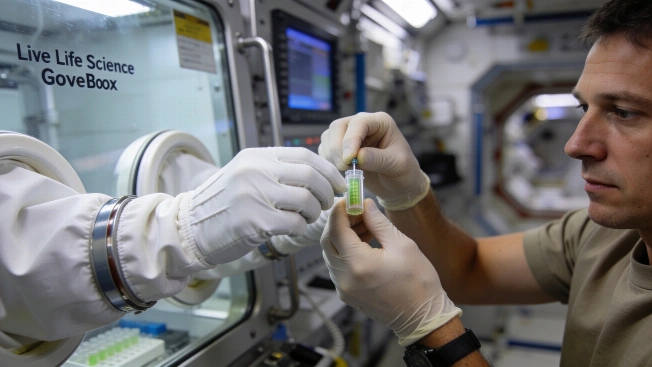
Jessica Watkins Prepares Cells for Cartilage Printing in Microgravity
On Oct. 9, 2026, Jessica Watkins prepared a cell-and-bioink mixture in Kibo's Life Science Glovebox for an investigation of cartilage bioprinting in microgravity; NASA's account describes the setup, not a tissue-quality result