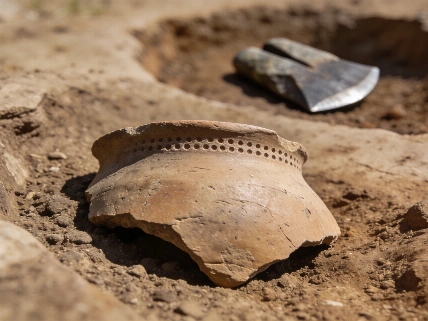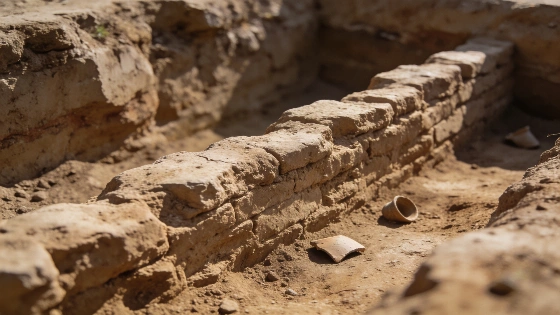
A Sui Wushu coin and period-style porcelain helped date part of a defensive complex at Changping Gudalinggou, where excavators recovered more than 60 objects across an area of about 800 square meters
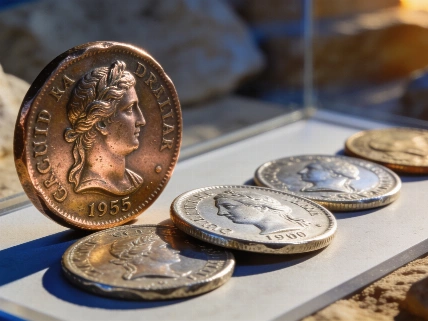
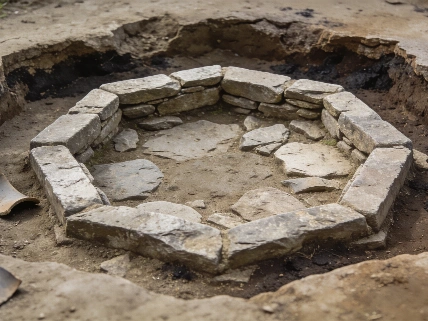
At Dalinggou Village in Beijing's Changping District, archaeologists excavated roughly 800 square meters of an early Great Wall garrison site and recovered more than 60 artifacts or artifact groups. Among them, a Sui Wuzhu coin and porcelain with characteristics of the period helped identify Sui-era activity at the complex. Shang Heng, a deputy research fellow at the Beijing Institute of Archaeology, described the finding as the first discovery of Sui Dynasty Great Wall remains in the Beijing region.
The Beijing Institute of Archaeology carried out the excavation from August 16 to October 9, 2026. The site had previously been classified in the national Great Wall resources survey as a Northern Qi Great Wall section. The Northern Qi ruled from 550 to 577 and built extensive frontier fortifications across northern China before the Sui reunified the country.
Dating the defenses
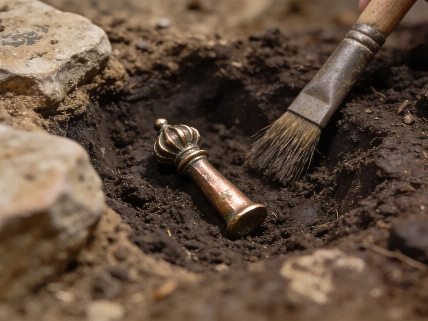
The recovered pottery, porcelain and metal objects fall into three functional groups: architectural components, daily-use items and weapons. Their chronology spans the Northern Dynasties, Sui and Jin periods. Drawing on the finds, historical records and expert assessment, researchers concluded that the garrison was used mainly during the Northern Qi and Sui periods, with some continued use during the Jin Dynasty.
The Sui Wuzhu coin and period-style celadon or porcelain were important chronological clues. Together, the objects document activity at the garrison during the Sui period; they do not by themselves establish when every surviving wall section was built. The Beijing Institute's findings were reported by Workers' Daily.
A regional network
The Great Wall developed through successive construction, rebuilding and expansion by different states and dynasties over many centuries. Before the Sui, the Northern Qi built extensive frontier fortifications across northern China; after reunification, the Sui inherited and maintained parts of the northern military system.
Shang said the Dalinggou discovery can inform research into the chronology, location, route and military defense system of Beijing's early Great Wall, as well as Sui-period wall remains in neighboring Hebei and Shanxi. The excavation's scale and contextual finds matter here, much as the burned-room setting shaped interpretation of the Seyitömer excavation.
The discovery was announced during the Fourth Beijing-Tianjin-Hebei Archaeological Academic Exchange event and the closing activities of the 2026 Beijing Public Archaeology Season. Researchers said the Dalinggou site provides a new chronological reference for studying early Great Wall development and the military landscape around ancient Beijing.