Excavations at the former Polish Military Transit Depot documented a barracks wing destroyed by a 1945 ammunition blast. The team recovered almost 900 valuable artifacts among about 2,700 objects; human remains found separately in November remain unidentified.
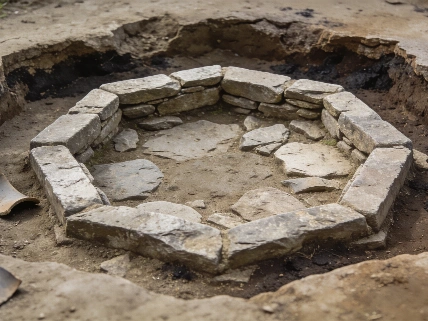
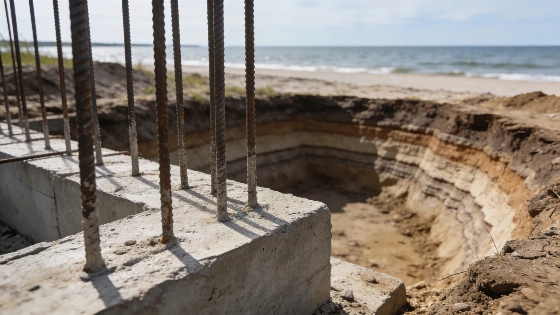
Ammunition detonated by German forces in April 1945 destroyed the northern wing of Westerplatte's former barracks. Excavators have documented part of the resulting crater, estimated to have once reached 20 meters in diameter.
The Museum of the Second World War conducted its 13th season of archaeological research at the Gdańsk site from April 9 to August 10, 2026. The team investigated 479 square meters across the barracks' northern wing and the former assembly ground of the Polish Military Transit Depot. In its season summary, the museum said the work documented the condition of the remains in both areas.
Evidence in the ruins
The northern-wing excavation covered 292 square meters. The remains include a reinforced-concrete gunsmith's workshop and a garage; archaeologists documented an inspection pit and an exit ramp inside the garage. The barracks had been built between 1935 and 1937 to house personnel stationed at the depot.
Another 187 square meters were excavated around the assembly ground. Archaeologists reached the level where Polish defenders walked during the September 1939 fighting. The area included the main command post, the crew's main bunker and a dressing station. The museum plans to uncover these structures and make them accessible to visitors as part of its construction project.
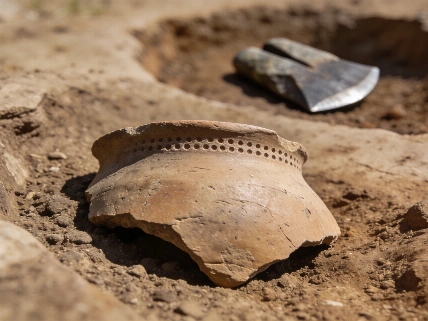
The excavation yielded about 2,700 objects, with almost 900 classified as valuable artifacts. Finds included the base plate of a Polish 81 mm mortar, part of a window frame with camouflage paint described as "English pink" and a damaged Polish military mess tin. A museum listing published on July 17 also highlighted the discovery of an element of a Polish mortar used during the September 1939 fighting. More than 28,000 pieces of ammunition and other hazardous items were secured. The museum described the inventory as approximately 28,000 explosive and dangerous military objects, including Mauser-system rifle cartridges, artillery-shell fuzes, shells measuring 20 to 150 mm and hand grenades.
The museum said much of the ammunition had been stored by German forces in the barracks late in the war, while other items had been moved there during postwar cleanup. A sapper supervising the excavation secured the hazardous finds and transferred them for neutralization.
Separate human remains
Construction work for the Westerplatte Museum brought a separate discovery on November 5, 2026: human remains alongside Polish military buttons and a bayonet. The museum announced the discovery on November 6. The associated equipment has raised the possibility that the remains belong to Legionnaire Mieczysław Krzak, a defender of the depot who died in September 1939. That identification is unconfirmed.
The museum construction covers 116,012 square meters. Archaeological supervision for the first stage began on February 9, 2026, and was scheduled to continue until June 2027. The museum reported that approximately 130 objects secured by a sapper had been found during this construction-related supervision; this is a separate figure from the total reported for the 13th excavation season.
The excavation belongs to a research program that began in 2016. In 2019, archaeologists found the graves of nine Polish soldiers; genetic testing later identified seven, whose remains were buried at the new Polish Army Cemetery at Westerplatte in 2022.
Investigations in 2024 found the remains of four Polish civilian prisoners of war murdered by Germans during the first months of the war. Science Report has also covered a different archaeological project in its account of medieval settlement mapping. At Westerplatte, the identity of the remains found in November has not been confirmed.