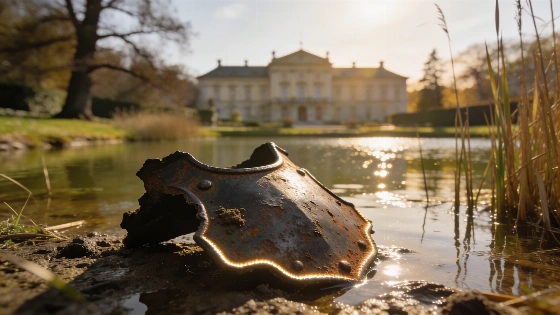
A film-preparation hunt in Lower Silesia recovered a cuirassier armour fragment from a palace moat. Its owner may have been a French or Prussian cavalryman
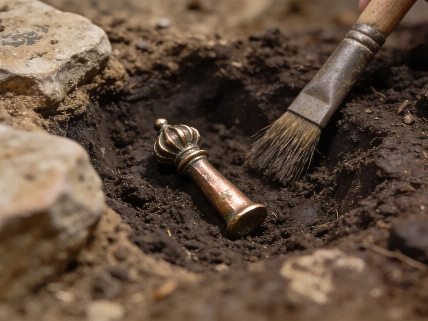
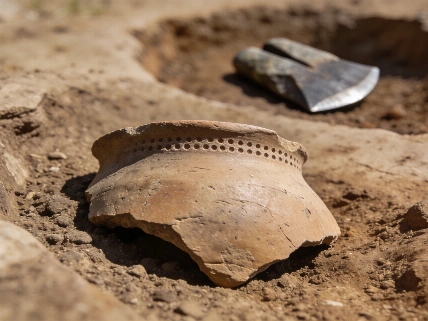
After the Red Army looted Pielaszkowice Palace in 1945, furnishings thrown from the residence sank into its moat. A later search of the mud recovered a fragment of 19th-century cavalry armour believed to have belonged to a French or Prussian cuirassier.
The find was made near Kostomłoty, about 40 kilometres from Wrocław. The operation had been organised as a treasure hunt for young actors preparing to film Satan from the Seventh Grade, a Polish novel by Kornel Makuszyński.
What the search recovered
Wiesław Andrysiak of the DRACO History Explorers Association found the armour after writer and journalist Joanna Lamparska urged the group to keep searching the moat. Lamparska hosts the Hi!History YouTube channel and organised the expedition.
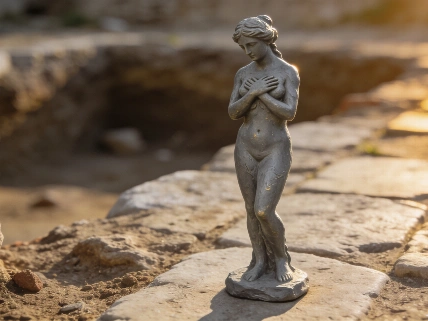
Other finds included fragments of carved park sculptures. Searchers also recovered metal fittings from the palace, among them original door locks. The organisers say the objects are to be donated to the Silesian House Museum in Ziębice for a state museum exhibition.
A separate Jerusalem clay-mould study traced figurine production to the city's Iron Age layers, offering another example of how artifacts can provide evidence of past activity.
A moat with a violent past
The palace had already witnessed a consequential episode during the Napoleonic Wars. On 4 June 1813, an armistice between Napoleon's forces and the allied armies of Russia and Prussia was agreed at the residence. Historical records also identify Pielaszkowice by the names Pläswitz and Pleiwitz. The truce followed French advances into Silesia, including to the area around Wrocław, but without a decisive general battle; Austrian diplomacy contributed to the suspension of fighting.
The surviving armistice text records that negotiations followed an earlier 30-hour suspension of arms. It set a demarcation line through Silesia, including locations such as Dittersbach, Plassendorf and Landshut, and established a neutral zone between the French and allied lines that troops were not permitted to occupy. The agreement was to last until 8 July, with six days' notice required before hostilities could resume. A scholarly account, Silesia during the Napoleon's campaigns in 1806/1807 and 1813, describes the truce as dividing Silesia into two parts separated by a demilitarised zone; the surviving armistice text sets out the neutral territory's restrictions. Accounts say Napoleon later regarded the decision as one of the greatest mistakes of his life.
The moat may also preserve objects lost during the palace's looting in 1945. Accounts of the site say furnishings were thrown through the windows and disappeared into roughly a metre of watery mud. Local residents retrieved Meissen porcelain soon after the war, but the moat apparently had not received a comprehensive search.
HeritageDaily reported that the expedition brought together professional search teams, including the HUNTER Search Group. Geophysics specialist Dariusz Gwiazda also took part, alongside members of the DRACO History Explorers Association from Żmigród.
From film research to history
The hunt was designed to help the young cast understand the experience of searching for treasure, a central element of Satan from the Seventh Grade. Producer Mariusz Pujszo of Skarb Film said the actors should experience the activity their characters would encounter. The adaptation is scheduled to reach cinemas in 2027.
For the cast, that meant wading through deep mud and silt with experienced searchers. Chris Cugowski, who plays one of the main characters, described the suction of the mud as it resisted each step.
Cuirassiers were heavy cavalry whose equipment typically included metal breastplates and helmets. The recovered piece is only a fragment, and the available account does not establish whether it belonged to a French or Prussian soldier.