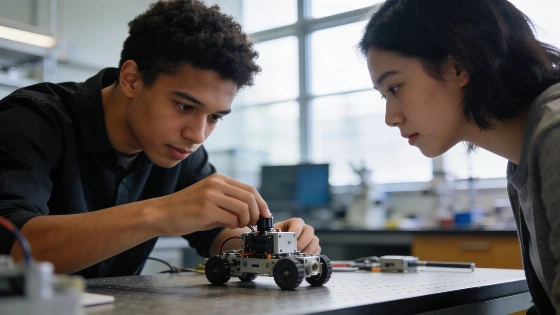
NASA has reopened registration for the 2027 ORBIT Challenge, offering university and college teams up to $500,000 to develop research-based solutions for Earth and future space missions.
NASA has relaunched the ORBIT Challenge for the 2027 season, inviting university and college students to develop technology concepts for terrestrial needs and future exploration. Registration opened on Sept. 14, 2026, closes on Nov. 16, 2026, and offers up to $500,000 in total prize funding. The official NASA challenge briefing also describes expert mentoring and an opportunity to present projects at an in-person showcase.
ORBIT stands for Opportunities in Research, Business, Innovation, and Technology for the Workforce. Its second season is aimed at student teams that can move beyond an attractive concept and show how an idea might work in practice. Participants are expected to conduct targeted research, develop early models, and test the feasibility of their proposals before the final stage. The emphasis is educational and engineering-focused: a proposal is not automatically a validated product, medical treatment, or flight-ready system.
The competition divides that work between two tracks with different technical goals. ORBIT Earth requires teams to choose a NASA-owned patent and develop a new commercial or nonprofit application for a critical terrestrial problem. The proposal must show a credible route to public benefit rather than simply repeat the original patent's purpose.
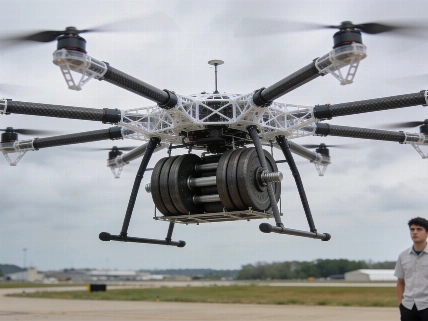
Possible applications include quieter drone technology and improved medical devices. These examples illustrate the track's central test: students must connect an existing NASA invention to a clearly defined need on Earth, then explain the assumptions, constraints, testing strategy, and potential path toward implementation.
Independent university reporting shows the scale of earlier participation. Texas A&M Engineering News reported that one ORBIT stage attracted 120 applications from U.S. universities, with 20 teams advancing to the final. A wound-healing project placed second in the Earth track and received more than $35,000, as described in the university's campus competition report. That result demonstrates how NASA technology can be adapted for biomedical applications, while not establishing clinical efficacy or human-treatment readiness.
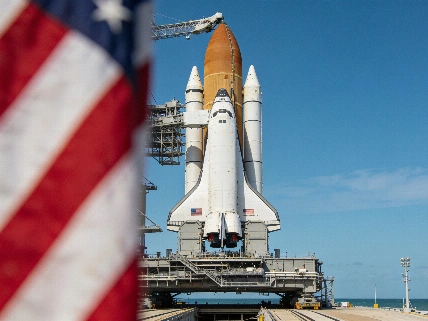
ORBIT Space turns the same problem-solving discipline toward exploration beyond Earth. Teams in this track develop concepts intended to support NASA's Artemis program and future efforts to sustain people on the Moon, Mars, and beyond.
The brief covers practical systems rather than a single mission payload. Teams may work on power, communications, navigation, living solutions, or astronaut health and well-being. The available program description does not identify a required instrument or flight design, so the competition evaluates the strength and feasibility of the proposed concept rather than the performance of an operating spacecraft.
That distinction matters. A student proposal is not a demonstrated space technology, and a feasibility analysis is not a flight test. ORBIT gives teams experience with the research, design, and engineering decisions that must precede a deployable system. In that respect, the challenge complements the broader technology-development pipeline used by NASA and other research organizations, where prototype performance must be separated from operational evidence.
The strongest teams will earn places at an in-person Pitch Showcase, where they will present their solutions to expert judges. Award decisions are based on presentations and interactive question-and-answer sessions, making technical communication part of the evaluation rather than an accessory to it.
NASA has also added specialty recognitions for the new season. The Faculty Advisors' Choice Award will recognize professionalism and communication across teams, while the Next Steps Award will honor the project with the strongest plan for continued development after the challenge ends.
Projects that combine the aims of ORBIT Earth and ORBIT Space can qualify for an Integration Bonus. That structure gives teams a reason to link terrestrial utility with exploration needs, but it does not guarantee that a combined proposal will be technically superior. The work still has to withstand research review, feasibility analysis, and direct questioning.
Previous awards also show that ORBIT uses several monetary levels rather than a single winner-takes-all payment. The University of Puerto Rico at Mayagüez reported that NOVA UPRM received $50,000 for its PRINCE project: $15,000 for reaching the final, $30,000 for first place in the Space track, and $5,000 for the People's Choice Award. These distinctions reward progress, track performance, and audience response separately.
The timetable is concrete: registration closes on Monday, Nov. 16, 2026, through the NASA STEM Gateway. Teams therefore have a defined entry point before they begin the research, modeling, and analysis that the challenge requires. Complete eligibility requirements and official rules are available through NASA's ORBIT program materials.
NASA describes the program as a way to provide agency mentoring, immersive exposure to missions, and skills relevant to aerospace careers. Those benefits are educational rather than evidence that any individual project will reach production or spaceflight. The measurable promise is access to a structured process that forces an idea to confront research questions, design constraints, and feasibility.
The scientific culture behind that process is familiar across institutions such as MIT and the peer-reviewed journal Nature: an intriguing idea becomes more credible when its assumptions are explicit, its measurements are reproducible, and its limitations are stated clearly. ORBIT does not replace independent validation, but it gives students an organized setting in which to practice those habits.
That is the strongest case for ORBIT's 2027 season. With substantial prize funding and two sharply different application paths, the challenge gives student teams more than a stage for invention: it gives them a test of whether an ambitious concept can survive contact with engineering reality. Students tracking the wider space field can also compare this practical focus with the observational work discussed in an earlier astronomy report, where conclusions depend on recorded data rather than presentation alone.
In ORBIT, the central evidence will come from teams' research models, feasibility arguments, and answers to judges rather than from a spacecraft already collecting data. That makes the challenge valuable but properly limited: it is a pipeline for developing technical judgment and talent, not a certification that a proposal is ready for deployment. Registration through the NASA STEM Gateway is the immediate opportunity for students who can turn a NASA patent or an exploration need into a defensible engineering case.