Emergency excavation at Monte Abatone has exposed tomb furniture cut into tufa, red wall pigment and a decorated vessel. Looting damaged the chambers, but surviving traces retain archaeological context.
Emergency work began after several tombs at Monte Abatone collapsed or became unstable. The investigation and stabilization operation exposed burial chambers with features that had not been documented before, including furnishings carved from bedrock, vaulted architecture and surviving wall decoration. The Soprintendenza Archeologia Belle Arti e Paesaggio per l'Etruria Meridionale, the heritage authority responsible for the area, reported the discoveries on November 3, 2026.
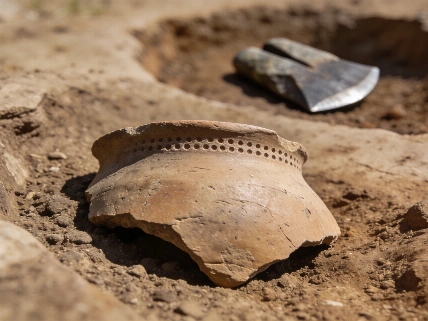
The investigation also recovered an almost completely preserved ceramic vessel decorated with animal figures and red paint. Its form resembles a stamnos, a broad-bodied container associated with storing or serving liquids. The discovery was reported by Finestre sull'Arte.
Furnishings in stone
One chamber retains much of its original vaulted ceiling. In another, funerary furnishings, including throne-like seats, were carved directly into the local tufa. In some Etruscan tombs, rock-cut furniture echoed domestic spaces, making the burial chamber a symbolic residence for the dead. These fixed features remain in their architectural setting, even though earlier clandestine excavations disturbed the tombs and removed an unknown quantity of funerary material.
A separate chamber preserves broad areas of red pigment on its walls. The surviving decoration is fragmentary, but it records the visual treatment of the tomb's interior. Pigments are more vulnerable than the surrounding rock: shifts in humidity, mineral deposits and prolonged exposure can cause painted surfaces to detach, fade or disappear.
Monte Abatone formed part of the burial landscape of ancient Caere, the Etruscan city identified with modern Cerveteri. The site is approximately 40 kilometers from Rome; Caere is also described as lying about 35 kilometers northwest of the capital. Its cemeteries include monumental chamber tombs and simpler rock-cut graves, with burial spaces that could reproduce domestic features such as beds, benches and seats.
Evidence and context
The Superintendency of Archaeology, Fine Arts and Landscape for Southern Etruria said crews cleared blocked entrances and removed accumulated deposits inside the unstable tombs before documenting the chambers and carrying out conservation work. A satellite survey near Egypt's coast offers a different example of how archaeological investigations can locate and examine buried remains.
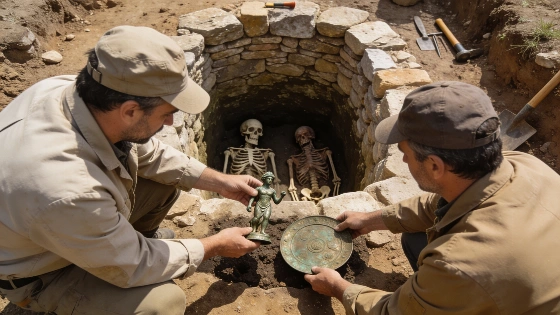
Past clandestine excavations had disturbed the Monte Abatone tombs and removed an unknown amount of funerary material. Objects and fragments left behind can still help archaeologists reconstruct parts of the original assemblages when they remain associated with architectural features or deposits. Looting has damaged that context, limiting what can be established about some finds.
The vessel's near-complete preservation makes it a notable portable find from the intervention. Its manufacture date and original use are not established in the reported account; further study after conservation may help clarify both.
Monte Abatone's chambers contribute evidence for the funerary architecture of Caere, where tombs could imitate houses with rock-cut beds and benches. All tombs included in the emergency program have been archaeologically investigated and documented, and made structurally secure.