A new United Nations Environment Programme analysis finds that global average temperatures are set to exceed the 1.5°C threshold established by the Paris Agreement within years, raising the stakes for rapid emission reductions and climate adaptation
Global climate models now indicate that the world is on the verge of surpassing the 1.5°C warming limit set by the Paris Agreement, according to a new assessment from the United Nations Environment Programme. This threshold, once considered a distant risk, is now projected to be crossed within the next several years unless greenhouse gas emissions are cut far more rapidly than current policies allow.
Crossing the 1.5°C Threshold
The Paris Agreement, adopted in 2015 by 196 nations and territories, aimed to keep the rise in global average temperature well below 2°C above pre-industrial levels, with a preferred target of 1.5°C. The latest UNEP report, "Limiting Overshoot: Navigating exceedance of 1.5°C and pathways towards return," finds that current emission trajectories make a near-term overshoot of the 1.5°C mark all but inevitable. The report draws on recent climate model projections and observed temperature trends, which show that the planet has already warmed by more than 1.2°C since the late 19th century.
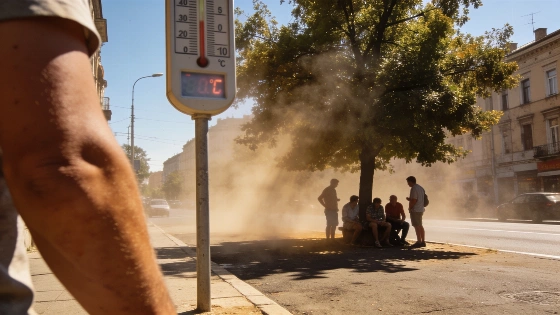
Recent years have seen a series of record-breaking heatwaves, wildfires, and floods, consistent with the expected impacts of a warming climate. The UNEP analysis warns that even a temporary overshoot of the 1.5°C threshold will increase the risk of severe and potentially irreversible climate impacts, including more frequent extreme weather events and heightened vulnerability for communities worldwide.
Evidence and Model Projections
The UNEP report synthesizes data from multiple global climate models, which incorporate atmospheric greenhouse gas concentrations, land use, and energy system trends. These models indicate that, without immediate and sustained emission reductions, the 1.5°C limit will be exceeded within the next decade. The report emphasizes that the overshoot could be minimized in both magnitude and duration if countries accelerate efforts to cut emissions and deploy carbon removal technologies.
Key figures from the report highlight the scale of the challenge: global average temperatures have already increased by approximately 1.2°C since pre-industrial times, and current policies are projected to result in warming of 2.5°C or more by the end of the century. The report underscores that returning to below 1.5°C would require not only rapid emission cuts but also large-scale removal of carbon dioxide from the atmosphere, a capability that remains technologically and economically limited.
Mitigation and Adaptation Strategies
According to the UNEP analysis, two parallel strategies are essential: immediate reduction of greenhouse gas emissions and adaptation to the impacts of climate change already underway. The report calls for urgent action to reduce emissions of carbon dioxide and methane, the two most significant contributors to global warming. It also highlights the need for investment in adaptation measures to protect vulnerable populations from the effects of extreme heat, flooding, and other climate-related hazards.
While carbon capture and storage technologies are identified as a necessary component of long-term climate stabilization, the report notes that these approaches are still in early stages of deployment and cannot substitute for rapid emission reductions. The UNEP assessment stresses that adaptation efforts must be scaled up alongside mitigation, as many communities are already experiencing the consequences of a changing climate.
Scientific and Policy Implications
The UNEP report does not present the overshoot of 1.5°C as a point of no return, but it does warn that the window for limiting the scale and duration of the overshoot is closing rapidly. The analysis makes clear that every fraction of a degree matters for reducing the risks of irreversible climate impacts. The scientific consensus reflected in the report is that immediate, coordinated action is required to avoid the worst outcomes projected by climate models.
Despite the daunting outlook, the report maintains that returning to below 1.5°C remains physically possible if global emissions are cut sharply and negative emissions technologies are developed at scale. However, the gap between current national commitments and the reductions needed remains wide. The evidence leaves little room for complacency: the physical limits of the climate system are indifferent to political timelines, and the consequences of delay are already visible in the intensification of extreme weather events worldwide.
Climate models are mathematical representations of the Earth's atmosphere, oceans, and land systems that simulate how temperature, precipitation, and other variables respond to changes in greenhouse gas concentrations. These models are calibrated using historical observations and are continually refined as new data become available. While no model can predict the future with absolute certainty, the convergence of independent models on similar warming projections increases confidence in their results. The 1.5°C threshold is not a physical tipping point but a policy target chosen to minimize the risk of severe climate impacts. Exceeding this limit, even temporarily, increases the likelihood of crossing thresholds in natural systems that could trigger long-lasting or irreversible changes.