
Troy
1 reportTroy is an archaeological site where structures, deposits, artifacts, and environmental evidence preserve past activity. The historical case is built from site location, excavated structures, and environmental context, while gaps in preservation limit claims about identity, date, or purpose.
Coverage of Troy examines stratigraphic context, dating evidence, and architecture or material culture. The account anchors architecture or material culture in field records and uses laboratory dating to test whether the pattern extends beyond one dataset; the result is bounded by the possibility that disturbance, incomplete excavation, and later restoration can limit reconstruction.
Coverage of Troy examines stratigraphic context, dating evidence, and architecture or material culture. The account anchors architecture or material culture in field records and uses laboratory dating to test whether the pattern extends beyond one dataset; the result is bounded by the possibility that disturbance, incomplete excavation, and later restoration can limit reconstruction.
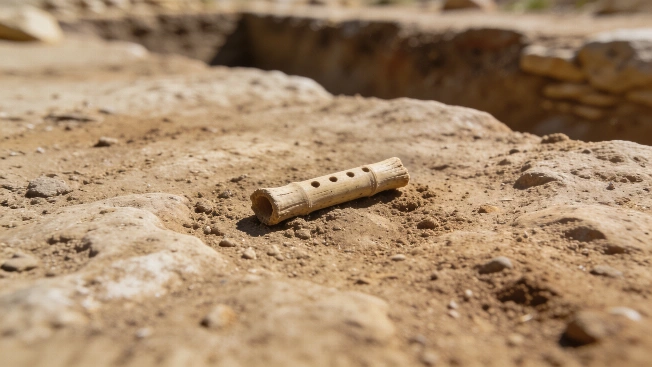
Troy's 2,800-Year-Old Flute Adds a New Kind of Evidence
At Troy, the flute came from an eighth-century BCE layer, while a much older idol head was recovered near Troy II. Their contexts differ sharply, and neither find settles how the objects were used