
Pulsar
4 reportsWork involving Pulsar is reported through population context, while also considering formation history and spectral type. For spectral type, the primary record comes from multiwavelength observations, with distance or orbit estimates providing a separate test; the account does not overlook that limited viewing geometry and indirect measurements can leave competing explanations.

Fermi Data Search Finds a Pulsar in Hours Instead of Centuries
A cryptography-derived lattice search isolated PSR J1622-7204 in Fermi gamma-ray data using about 10 hours of standard processor time, where an earlier method would have needed the equivalent of 600 years
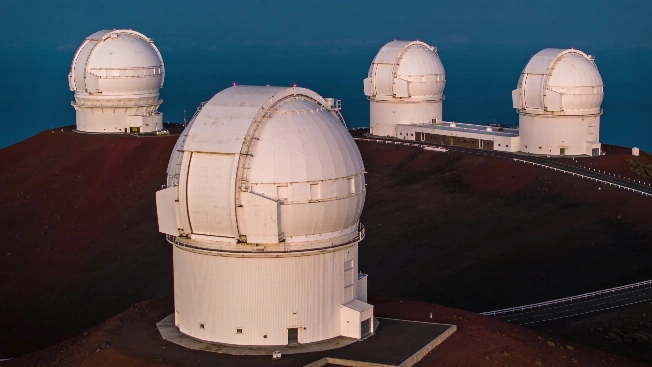
Four telescope array could trace gamma-ray bursts to the early universe
Four 23 m telescopes at La Palma will work together to detect faint atmospheric flashes from high-energy gamma rays, with sensitivity that could extend observations to bursts at redshifts near z∼4

XRISM Tracks Stellar Wind Falling Onto a Pulsar
XRISM has traced iron-rich plasma moving toward the pulsar GX 301-2 at about 540,000 kph, providing spectroscopic evidence that a neutron star captures its giant companion's stellar wind and powers recurring X-ray flares.
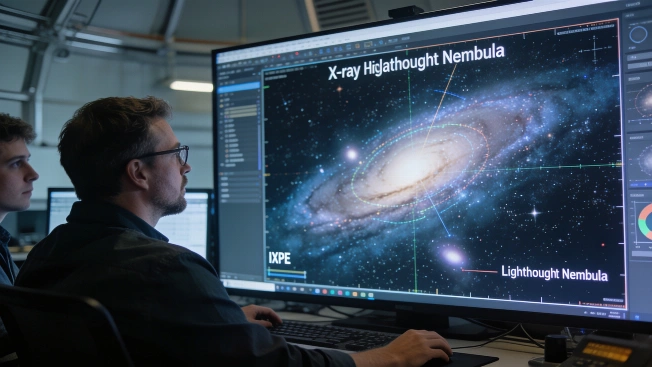
NASA's IXPE Maps Magnetic Field of Unusual Pulsar in Milky Way
Astronomers used NASA's Imaging X-ray Polarimetry Étudier to map the magnetic field around pulsar PSR J1101-6101, revealing how high-energy particles stream through the Milky Way and testing long-standing theoretical predictions.