
Muon
1 reportMuon is a fundamental or composite particle identified through interactions, quantum properties, decay behavior, and experimental signatures. Evidence comes from interaction channels, particle classification, and electric charge, and competing models remain viable when observations are sparse or indirect.
For Muon, the central questions concern detector signatures, while also considering role in particle models and quantum properties. Conclusions concerning detector signatures remain tied to collider or cosmic observations, decay measurements, and transparent methods; the result is bounded by the possibility that rare signals and model-dependent backgrounds can limit precision.
For Muon, the central questions concern detector signatures, while also considering role in particle models and quantum properties. Conclusions concerning detector signatures remain tied to collider or cosmic observations, decay measurements, and transparent methods; the result is bounded by the possibility that rare signals and model-dependent backgrounds can limit precision.
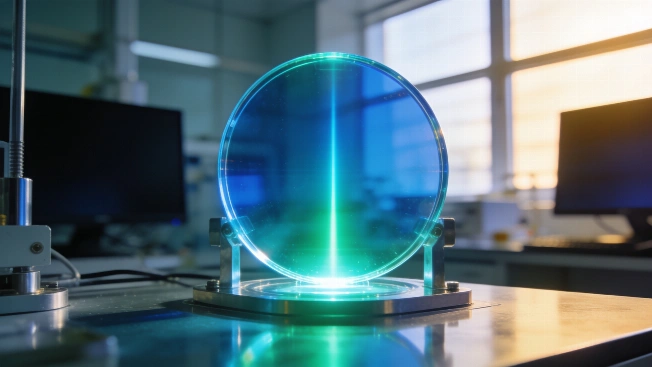
Gadolinium Glass Scintillator Detects Four Radiation Types
A cerium-doped gadolinium oxyfluoride glass produced signals under X-rays, gamma rays, neutrons and particle beams, with tests also reporting 29.8 lp/mm imaging resolution and 85.5% energy transfer to cerium ions