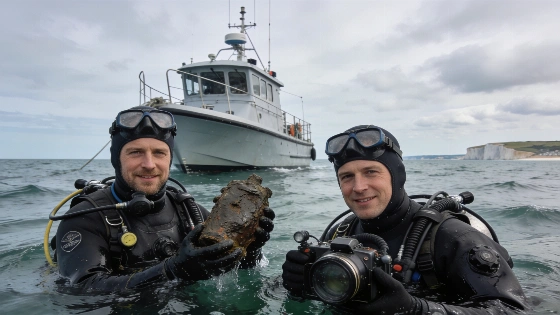
Archaeologists and maritime historians have located the remains of HMS Tiger, a Royal Navy destroyer lost in 1908, using archival research and underwater survey methods. The find highlights evolving legal protections for historic military wrecks
The remains of HMS Tiger, a Royal Navy destroyer lost in a 1908 collision, have been identified on the seabed of the English Channel after more than a century. The discovery, made by ProjectXplore researchers and divers, concludes a long-standing search for the vessel, which sank following a catastrophic nighttime collision with the cruiser HMS Berwick during naval exercises off the Isle of Wight.
Locating the Wreck
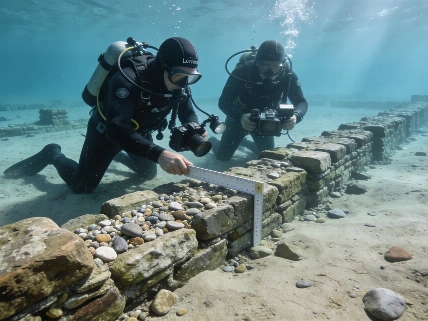
ProjectXplore's team spent five years analyzing historical records, naval charts, and survivor accounts to narrow the search area. Their efforts led to the identification of the shattered hull off the Isle of Wight, where the vessel had eluded previous searches. The site was confirmed through underwater survey and documentation, providing the first direct evidence of the destroyer's final position since its loss in 1908.
HMS Tiger was carrying 57 crew members at the time of the disaster. Fewer than half survived the collision, which split the vessel in two and caused the bow to sink almost immediately. The stern remained afloat for only a few minutes before also disappearing beneath the surface. The loss was widely reported at the time, with national attention and commemorative materials produced in its aftermath.
Legal and Ethical Context
The identification of HMS Tiger's wreck coincides with proposed changes to the United Kingdom's Armed Forces Bill, which would expand automatic legal protection to military shipwrecks as soon as they are discovered. Under the new framework, disturbing or removing objects from protected wrecks without permission would become an offense, though responsible recreational diving would still be permitted under a strict "look but don't touch" policy. The proposed legislation aims to safeguard the final resting places of military personnel and preserve sites of archaeological and historical significance.
Existing protections under the Protection of Military Remains Act have been in place since the 1980s, but coverage has been limited to certain vessels and time periods. The new proposals would extend eligibility to wrecks over 200 years old, potentially including ships from the Spanish Armada and merchant vessels lost while serving under Admiralty orders. ProjectXplore and other heritage groups have welcomed these changes as a constructive step toward protecting underwater cultural heritage.
Historical and Archaeological Significance
The loss of HMS Tiger occurred during a period of rapid naval innovation and training in the early twentieth century. The destroyer, weighing approximately 400 tons, was struck amidships by the 10,000-ton cruiser HMS Berwick during night maneuvers. The collision's force and the rapid sinking of both sections of the vessel left little opportunity for rescue, resulting in significant loss of life. Despite extensive searches by the Royal Navy and later shipwreck hunters, the precise location of the wreck remained unknown for 118 years.
The discovery of HMS Tiger's remains provides new opportunities for archaeological study of early twentieth-century naval construction, collision damage, and underwater preservation. The site also serves as a maritime grave for the sailors who perished, raising important questions about the treatment and commemoration of military dead at sea. Responsible visitation and documentation are emphasized by heritage authorities, who stress the importance of learning from such sites while respecting their status as war graves.
Recent advances in underwater archaeology and archival research have enabled the identification of previously lost wrecks, contributing to a broader understanding of maritime history and preservation. Comparable research into the preservation of organic remains, such as the chemical processes that allow ancient brain tissue to survive in archaeological contexts, has also expanded the field's methodological toolkit, as discussed in recent studies on ancient tissue preservation.
Preservation and Future Research
The HMS Tiger wreck site offers a rare opportunity to examine the material consequences of early twentieth-century naval accidents. Archaeologists and conservators will need to balance research interests with ethical considerations, particularly regarding disturbance of human remains and the site's status as a war grave. Ongoing documentation and non-invasive survey methods are likely to be prioritized, in line with evolving best practices for underwater heritage management.
As legal frameworks adapt to new discoveries, the case of HMS Tiger underscores the importance of integrating archaeological evidence, historical documentation, and ethical stewardship in the management of underwater cultural heritage. The site's preservation will depend on continued collaboration among researchers, heritage authorities, and the wider public.
Understanding the archaeological context of underwater wrecks requires careful attention to both material evidence and site formation processes. Taphonomy-the study of how remains are altered after deposition-plays a crucial role in interpreting shipwrecks, as factors such as water movement, corrosion, biological activity, and human intervention can affect preservation. Accurate documentation and non-destructive survey techniques help researchers reconstruct the events leading to a vessel's loss and assess the integrity of the archaeological record, while legal and ethical frameworks guide decisions about access, research, and commemoration.