US Space Command has conducted its first live orbital maneuver exercise, using satellites to simulate close-approach operations and test military tactics for potential conflict in Earth orbit
Military satellites have now moved beyond passive observation. In a recent exercise, US Space Command directed operational spacecraft to perform coordinated maneuvers in orbit, simulating the kind of close-proximity operations that could define future conflicts in space. This marks the first time the United States has publicly acknowledged live, on-orbit testing of what military officials describe as "dynamic engagements"-a step that signals a shift from theoretical planning to practical rehearsal of orbital tactics.
Simulated Conflict in Orbit
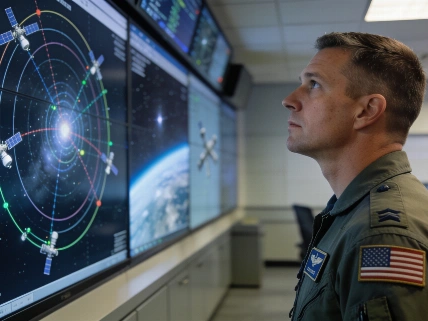
The exercise, known as Apollo Maneuvers 2026, involved US military satellites and international partners executing controlled approaches and repositioning in a simulated contested environment. While the specific spacecraft and number of assets involved remain undisclosed, the stated objective was to validate the ability to maneuver satellites for tactical advantage, not just for routine orbital adjustments. According to US Space Command, the side that can maneuver persistently and at scale will set the operational rhythm in orbit-a principle that underpins the logic of the exercise.
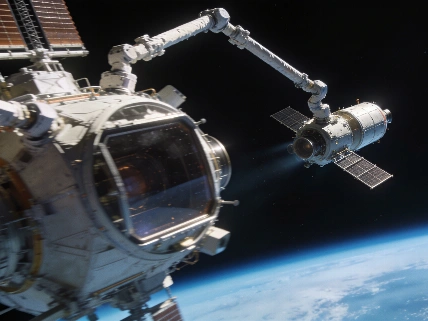
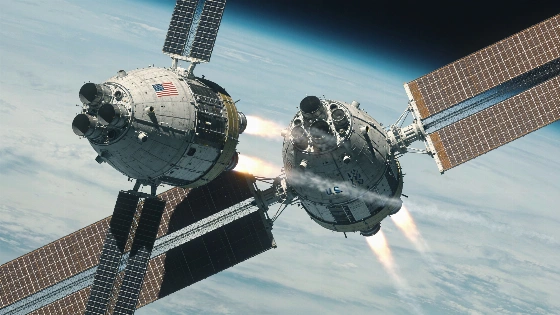
Such maneuvers are not limited to theoretical scenarios. In June 2026, a Rocket Lab Electron rocket launched a Puma satellite, which then rendezvoused with a True Anomaly Jackal spacecraft already in orbit. The two commercial satellites performed a series of close approaches, demonstrating the technical feasibility of dynamic engagements and providing a real-world testbed for military concepts. These operations were designed to simulate the interception, inspection, or potential disabling of adversary satellites-capabilities that have become central to military planning as more nations develop technologies for close-proximity operations.
Operational Details and Technical Limits
US Space Command has not released detailed telemetry or technical data from Apollo Maneuvers 2026, citing operational security. However, the exercise reportedly included both US and allied satellites, with maneuvers designed to test coordination, collision avoidance, and the ability to maintain control during rapid orbital changes. The focus was on demonstrating persistent maneuvering-repeated, controlled changes in position-rather than one-off evasive actions.
Despite these advances, US military officials have acknowledged that current satellite fleets lack some of the dedicated technologies required for full-scale orbital combat. In particular, the need for "orbital interceptors"-spacecraft capable of actively pursuing and neutralizing threats-remains unmet. The recent exercise relied on existing satellites and commercial platforms, highlighting both the progress and the limitations of current US capabilities. As noted in reported earlier, other nations are also advancing their own maneuvering and interception technologies, raising the stakes for operational readiness.
Strategic Context and International Implications
The move to live orbital exercises reflects growing concern over the vulnerability of space assets. Satellites are critical for communications, navigation, intelligence, and missile warning, making them high-value targets in any future conflict. Several countries, including China and Russia, have demonstrated the ability to approach, inspect, or potentially disable foreign satellites. The US response has been to accelerate the development of operational doctrine and to test the practical limits of satellite maneuvering in real time.
International participation in Apollo Maneuvers 2026 suggests that allied coordination is a priority, but it also raises questions about escalation and the risk of miscalculation. The Outer Space Treaty prohibits the placement of weapons of mass destruction in orbit, but it does not ban the development or testing of maneuvering satellites or kinetic interceptors. As military and commercial actors increasingly share orbital space, the technical and legal boundaries of "orbital dogfighting" remain unsettled.
Evidence and Remaining Uncertainties
While the exercise demonstrates a new level of operational realism, the evidence available to the public is limited to official statements and select mission details. No independent telemetry or third-party verification has been released. The technical challenges of close-proximity operations-such as precise navigation, collision avoidance, and secure command links-are significant, and the risk of accidental debris generation remains a concern. The US military's reliance on commercial partners for some of these demonstrations highlights both the flexibility and the vulnerability of current space infrastructure.
What Apollo Maneuvers 2026 establishes is not a new era of space warfare, but a clear intent to prepare for it. The exercise moves the conversation from hypothetical scenarios to tested capabilities, but it also exposes the gap between current technology and the requirements of sustained orbital defense. Until dedicated interceptors and robust countermeasures are deployed, the balance of power in orbit will remain fluid-and the risk of miscalculation or unintended escalation will persist.
To understand the significance of these maneuvers, it is important to recognize the technical and operational complexity of close-proximity satellite operations. Unlike routine orbital adjustments, dynamic engagements require precise control, real-time situational awareness, and reliable communication links. Even small errors in navigation or timing can result in collisions or debris, threatening not only military assets but also commercial and scientific satellites. As more actors develop the ability to maneuver in orbit, the challenge will be to maintain stability and prevent incidents that could escalate into broader conflict.